The Need To Grow
This documentary dives into the history of the soil and how modern farming methods has interrupted the natural ecosystem of soil. It explains how the rate of growth at exponential rates are destined to fail and collapse as it is not sustainable. In order to avoid this, speakers like Michael Smith, proposed that the top priority should be to repair the soil. He talks of how our society is stuck in this extraction mentality and so we are fixated on what we can get out of the earth rather than how we can give back it and maintain it.
“We have an estimated 60 years of farmable soil left on the planet. Mostly due to unsustainable agriculture… earth has lost a third of its farmable soil in the last 40 years”
The current harvest-based mentality into life-based economy is driving this farming culture of pesticides and genetically modified plant in order produce more crops. The use of pesticides interrupt the natural ecosystem of soil killing the life-forces like bacteria, insects and animals that all contribute to health of the soil. The health of our soil has deteriorated to a rate where we produce fruit and vegetables with half of the nutrients than that of crops farmed in natural types gardens that avoid the use of pesticides and genetic modifiers. It is also stated that healthy soil actually produces more crops than that of chemically treated crop. The unravelling of the ecosystem for the sake of capital gain as costing us more than what we are making.
Vandana Shiva, a physicist environment activist, talks of how the introduction of pesticides and genetically modified seed has damaged the soil so much that local famers in India have been left with dead land. David King, the founder of Seed Library of Los Angeles, discussed how the use of pesticides and the move towards genetically modified seedlings was pointless in that the reason for why it was created, which was to kill pests and generate more growth with crops has, has worsened due to these solutions. The issue now is that pesticides and the genetic modification of seedlings has created a new problem of super bugs and weeds which are twice as hard to get rid of. Here we see how these quick fix solutions have only exacerbated the issue, an issue that was not a real problem to begin with.
I feel this is very applicable to the fashion industry in that the sustainable, biodegradable materials that we need are dependant on agriculture. Yes, the production of our food is important however agriculture is responsible for far more than our food. It is also pivotal to the production process of materials needed in our every life like clothes hence it is critical that we start to repair and generate the health of our soil.
Textile Products
William and I were given the opportunity to accompany one of our lecturers to Textile Products where we donated our classes fabric scraps. We were kindly offered a tour by one of the workers who took us through the factory and explained the companies purpose and some of projects they were working on.
Textile Products is a family owner own business which has been in the business of textile production for about 55 years. The company produces a range of recycled textile products in Auckland that can be used in bedding, insulation and as carpet underlays. They take fabric scraps donated by different companies or groups to manufacture non woven fibres. Textile Products ethos is to recycle any type of textile waster with the view of to have zero textile waste disposed into landfills. It was explained that although they are happy to take on textile waste, they would also like to educate and encourage companies and people to recycle their own textile wastes. By doing so, they hope to reduce the amount of textile waste in New Zealand.
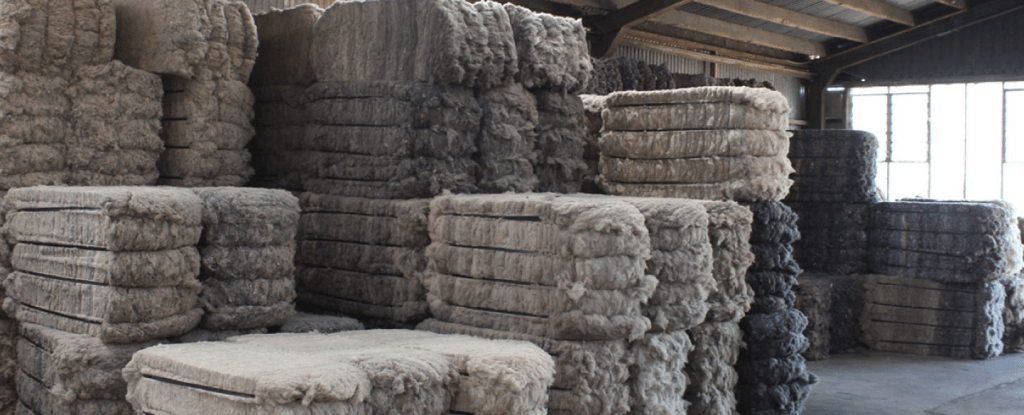
A current problem that the company is facing is an increase in woollen waste. It was explained that due to reduce demand for wool, farmers are left with increased waste of wool from sheep etc. To try rejuvenate the market for wool, the company is trying to explore different ways they can produce the wool and look into different ways these materials can be used e.g. as the insulation for jackets etc. I found this very interesting as in the early days of New Zealand production/manufacturing, wool was in high demand. Wool was also one of New Zealands most exported goods. It seems that the production of synthetic materials as seeped over to the wool industry with a shifting preference for these man-made materials/fabrics as opposed to the natural substitute.
It is great to see that we have a company like this in New Zealand. Another problem the company faces is lack of awareness of their company and what they do. Despite having had been in New Zealand for about 55 years, they explained that there is no real interest in recycled/upcycled textiles. Textile Products are finding it difficult to convince people that their products stand toe to toe and in some cases, are better than their more popular counterparts which are newly produced thus creating unnecessary waste and pollution. Although we have access to services that offer more sustainable options, what is proving to be difficult is change the mindset of people. That just because something is new does not mean that it is better.

 Seini's Blog for Earth-Centred Design and Cultural Sustainability