Haraheke Weaving with Paia Swanson Terepo
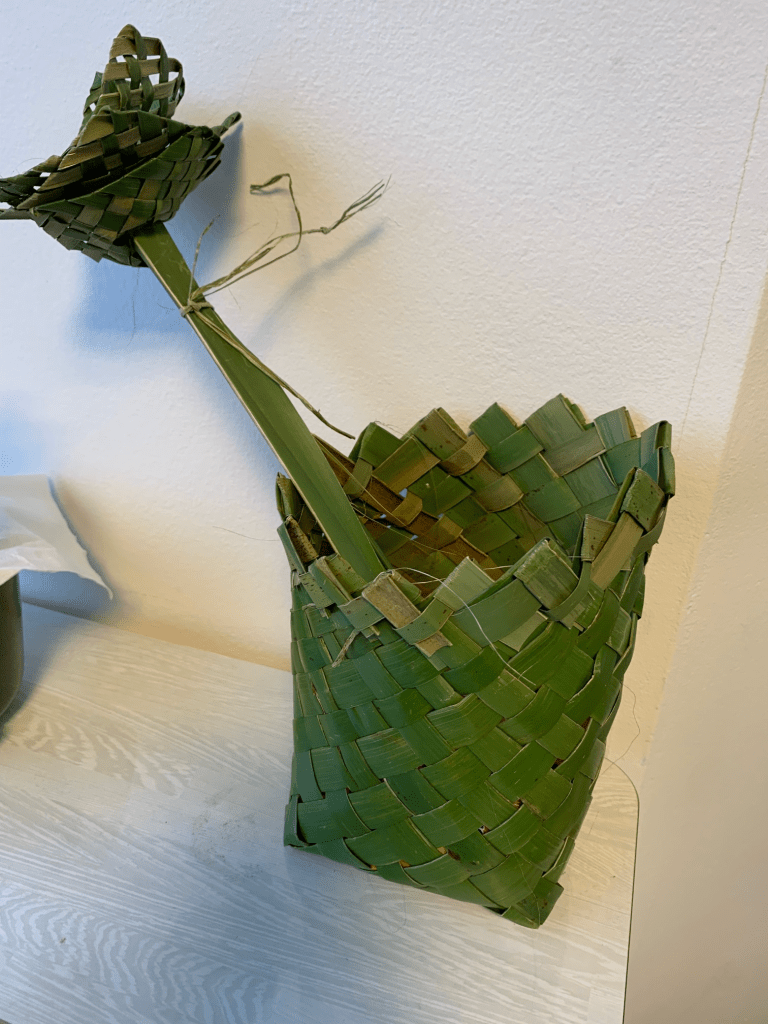
Before we started our class on weaving, Paia started off with an introduction of herself, acknowledgement of the land and paying respect to the haraheke plant that provided us with leaves for our weaving. Here we see a great example of Maori respect for land and with respect naturally flows through to a caretaker approach to the way one interacts with the environment.
I found the weaving process to be very relaxing. This repetitive action of looping over and under was very therapeutic. The result of having either a flower or a basket was even more satisfying as you got to appreciate the beauty of something that you created by hand. With patience and with genuine intent you are somewhat gifted with a lovely something (something being whatever it is that you set out to weave/make).
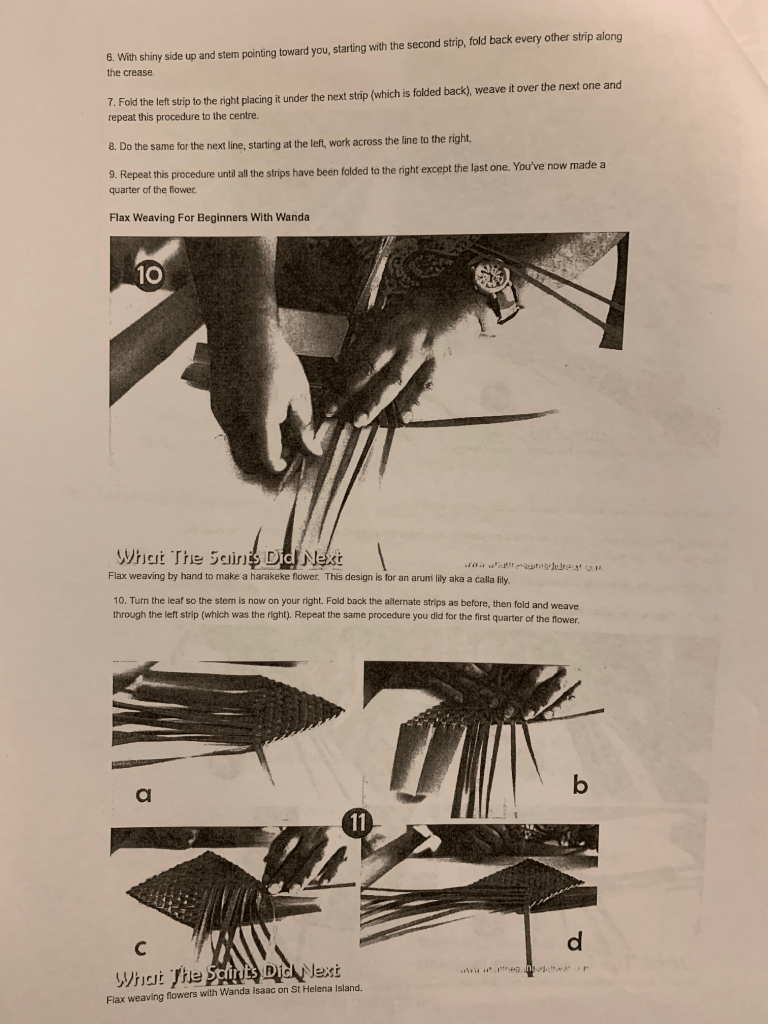
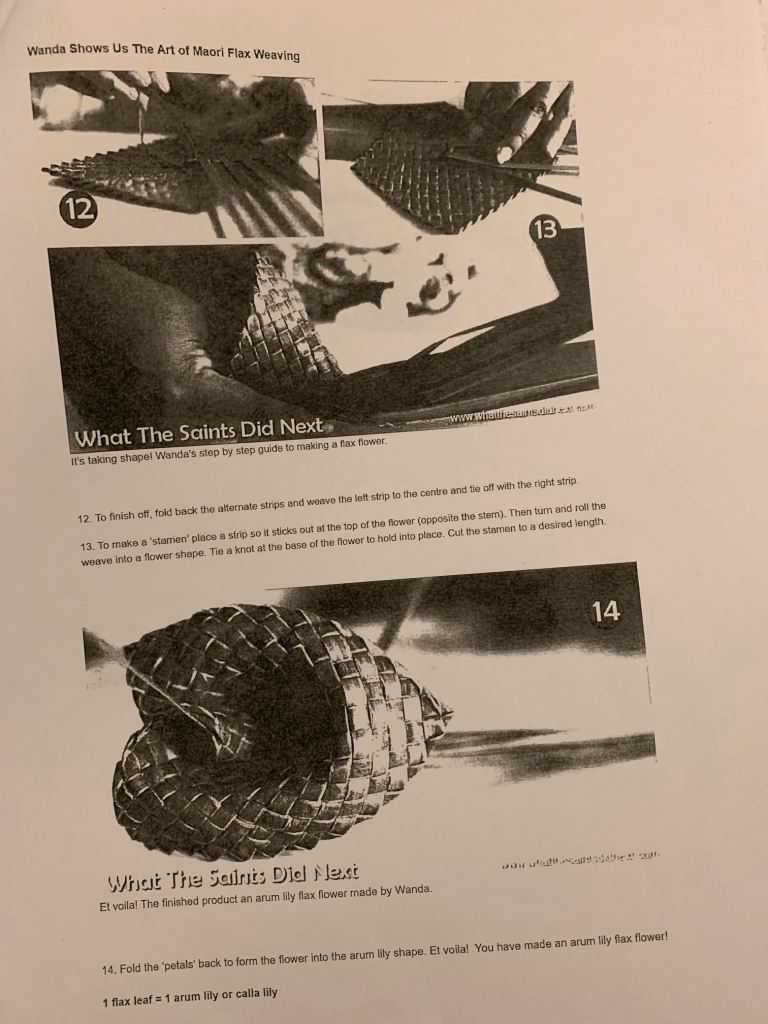
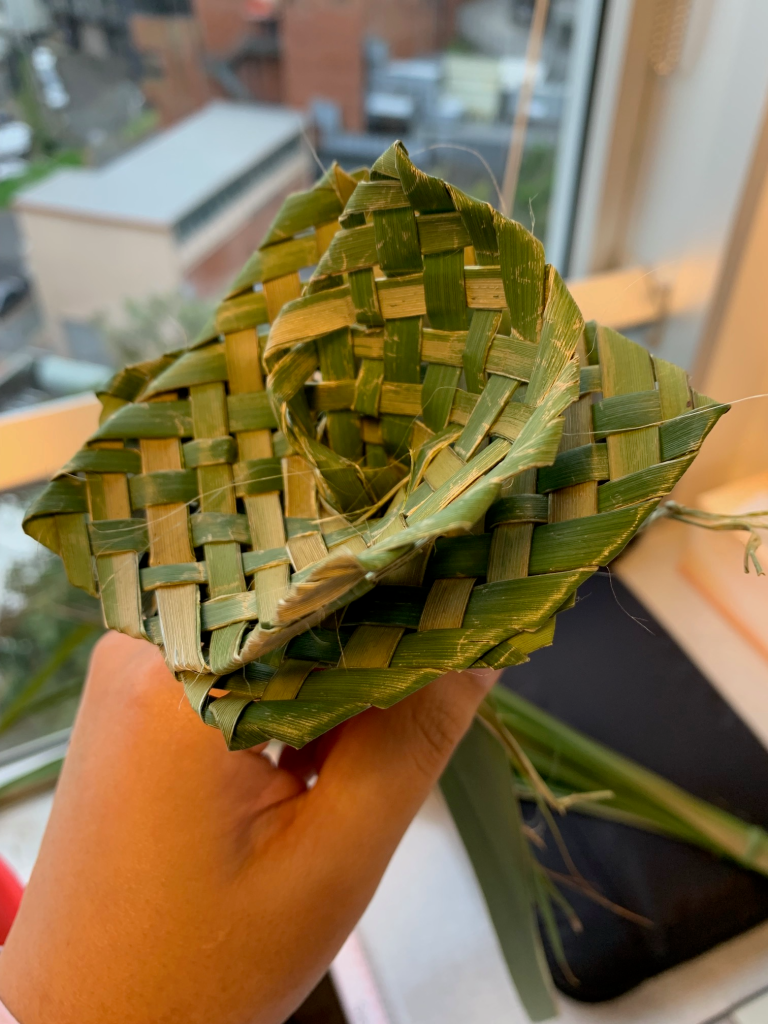
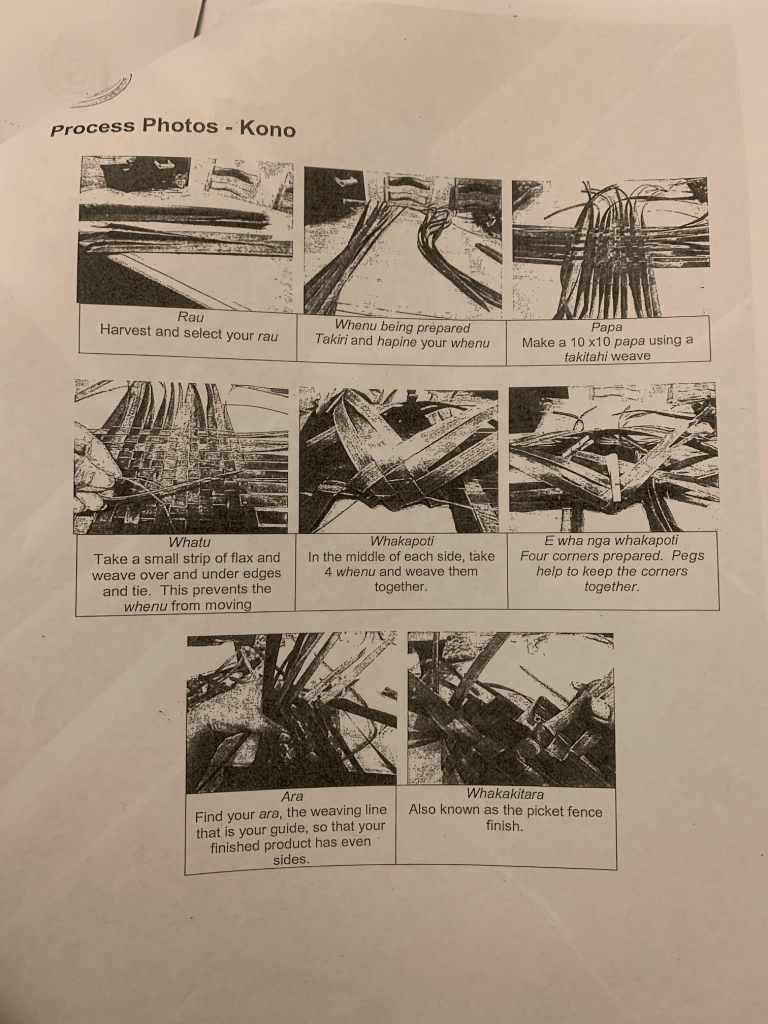
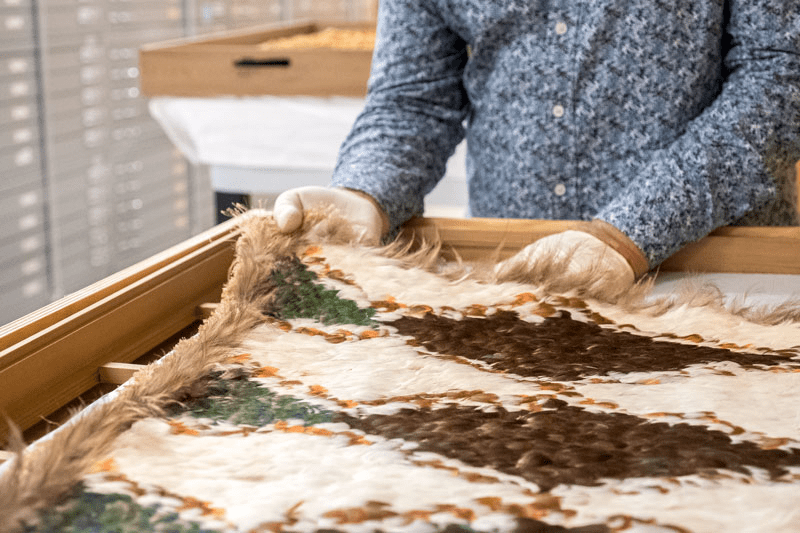
The beauty of weaving got me thinking about the garments that would have been made through this ancient practice of weaving. The kahu huruhuru which is a feathered cloak is woven with flax and feathers. The kahu huruhuru goes deeper than its purpose of clothing the body, it is also a vessel of ones ancestral bloodline, and is used as a way to signify the passing on of responsibility. A great example of this is when Whetu Tirikatene-Sullivan during Queen Elizabeths department in 1954. Whetu’s father had placed the cloak on Whetu’s shoulders thus bestowing on her the role of acting as the advocate for the Treaty of Waitangi. The connection Maori have with the kahu huruhuru is spiritual and permeates through time.
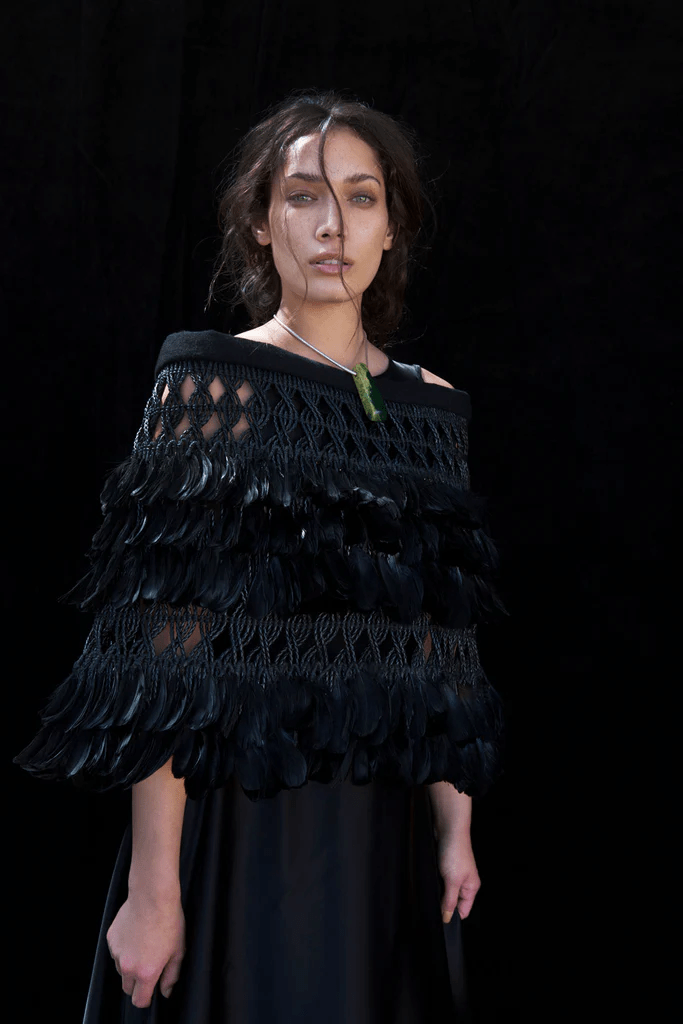
Kiri Nathan is a modern Maori designer who has integrated traditional Maori weaving practices into her clothes. Te Papa have acquired some of Kiri’s garments to showcase contemporary weaving practices. Her work shows us how the preservation of indigenous practices and cultures can promote creative ingenuity. In an interview with the Changemaker, Kiri states “The current portrayal of sustainability, especially from a fashion perspective, has a very narrow focus. In fashion it’s most often focussed on materials, labour rights and other ad hoc initiatives such as craft, waste and carbon. However sustainability is an all encompassing concept that considers the interconnectedness of living systems; systems such our planet and humanity. For these systems to not only support life, but to thrive, they need to be respected, and to exist in balance and harmony with each other.” I think this statement really captures the essence of project and the position that I have taken with my research.
Bibliography:
“Sustainable Fashion Interview: Kiri Nathan Maori Fashion Designer: Make Good.” makegood. Accessed May 17, 2023. https://www.makegood.world/kiri-nathan.
“Loading…: Collections Online – Museum of New Zealand Te Papa Tongarewa.” Loading… | Collections Online – Museum of New Zealand Te Papa Tongarewa. Accessed May 17, 2023. https://collections.tepapa.govt.nz/topic/3665.
 Seini's Blog for Earth-Centred Design and Cultural Sustainability