Textile production is one of the largest contributors to environmental pollution. There is large amount of water pollution due to the chemicals released during the dying and finishing of garment production. “Each year more than 700,000 tong of dyestuff are applied to 40 million tonnes of fabric”. Modern dyes are made up of petrochemicals which are non-renewable thus making them unsustainable. The water used in the chemical dying process is release either into the ocean/local rivers/waterways or onto the open land. With this in mind, we explored the method of natural dying. “The use of natural dyes leads to low usage of water and energy consumption as compared to the synthetic dyes and are easily biodegradable”. The use of plants, fruits/vegetables and nuts means that there are no toxic wastes being released into our waterways or onto the land. I will also add that certain dye like indigo are great examples of sustainable dyes as you continue to use the same dye path for years. During a discussion with Harita while we were making our indigo dye bath I learnt that there is a century old indigo dye bath that is still in use. I keep the indigo dye bath going the undergound dye maat is continuously fed to keep it alive.
For our natural dying experiment, we chose to trial during with brown and red onion skins.
DAY 1
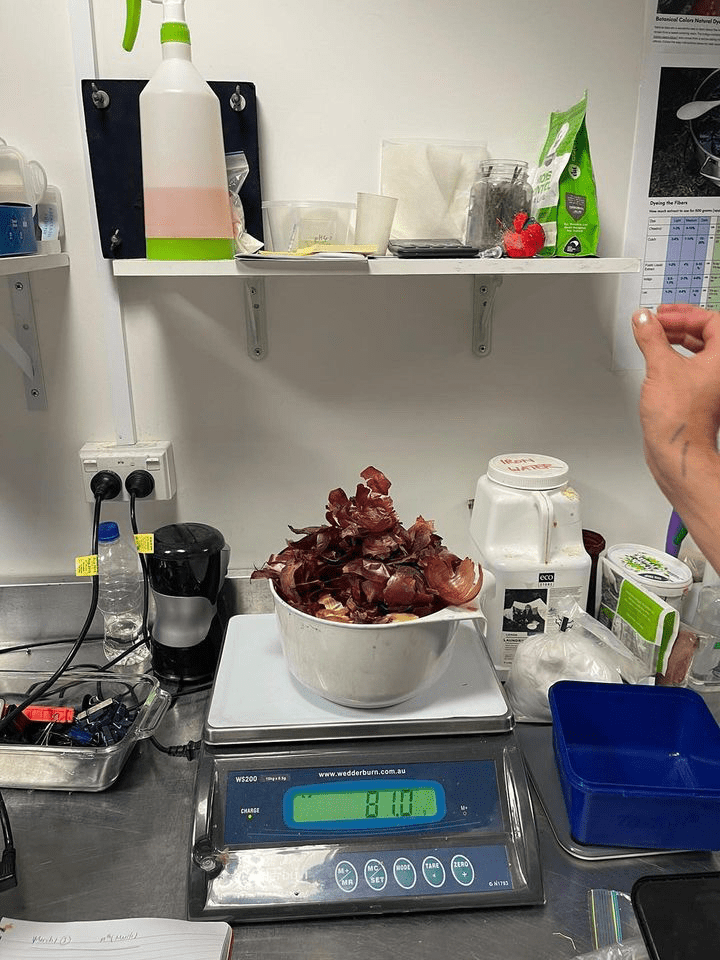
First we weighed our brown and red onion skins. For a richer/deeper colours, we aimed for over 80% to the weight of our fabric.
- The total weight of brown and red onion skins was 81 grams
- 78.5 grams was brown onion skins
- 20 grams was red onion skins
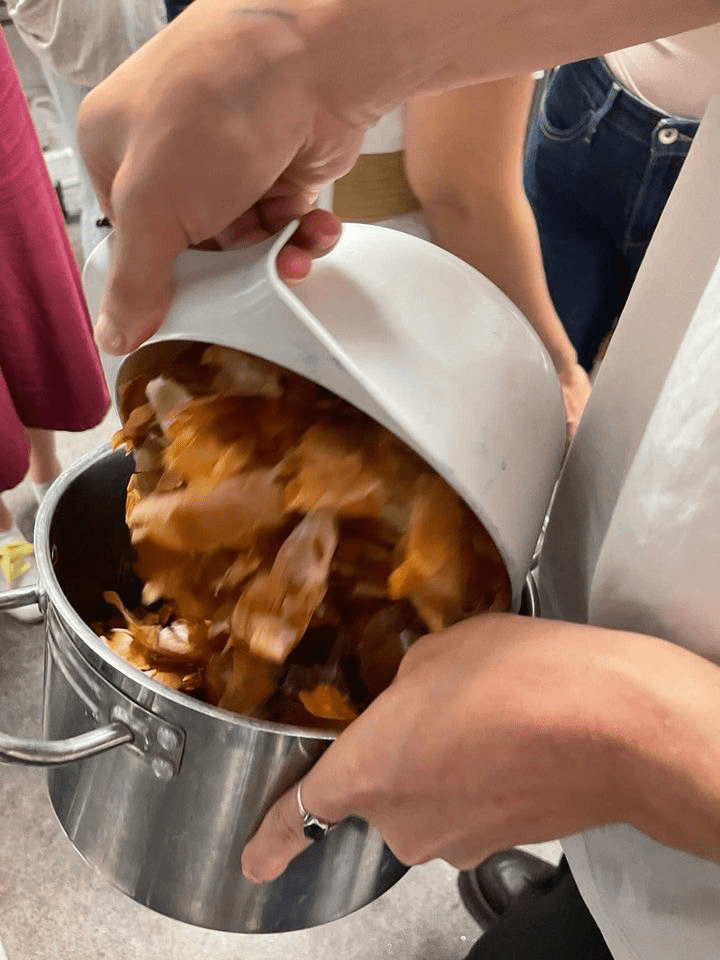
We then placed the onion skins into a pot and filled the pot with enough water to completely submerge the onion skins.
- Note that the ratio of dye extraction material to water will determine how diluted the colour extracted will be. For example, if you have a 1:1 dye material to water ration your extraction will be richer and if your have a 1:2 dye material to water ration, the extraction may be more diluted.
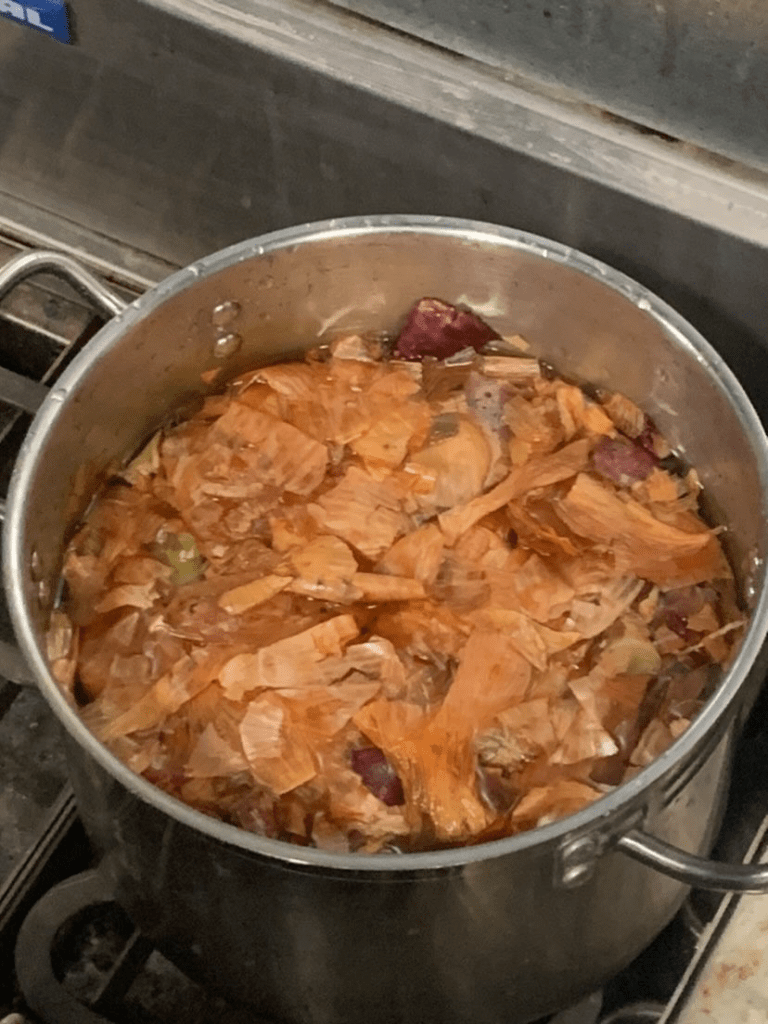
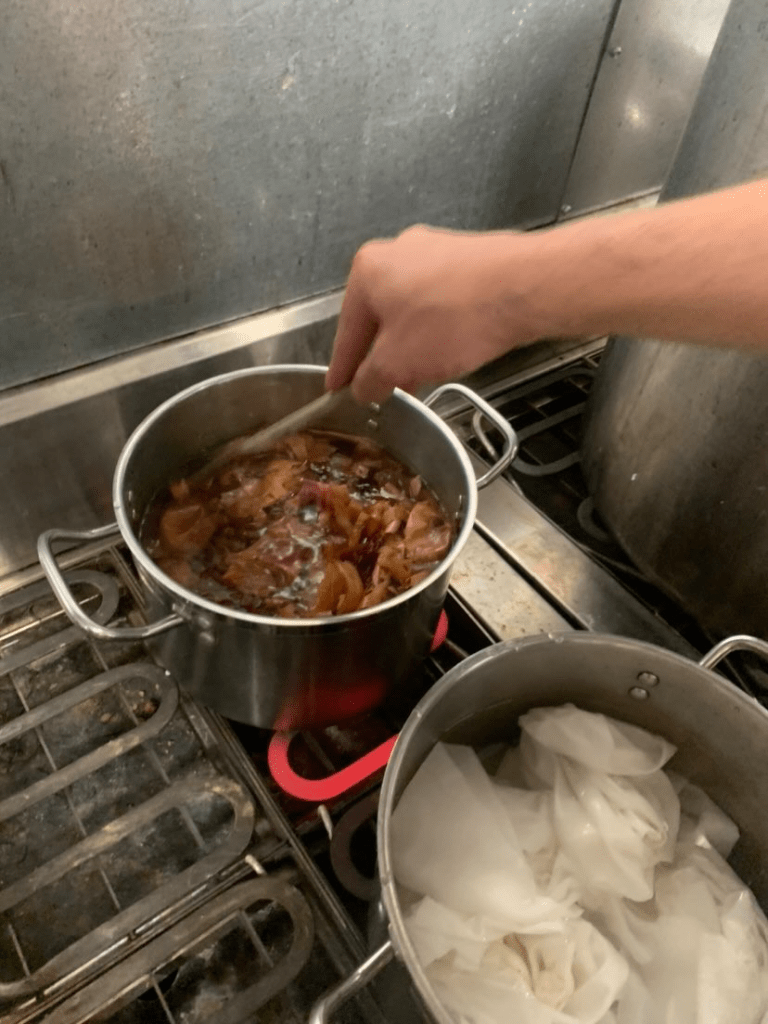
The pot in placed on the stove and brought to a boil. It is important to occasionally mix the onion skin to ensure there is no burning on the bottom of the pot. This also allows for a more even extraction of colour.
- We boiled the onion skins in water for about 2 hours. During the dye extraction process, you can generally boil the dye material for as long as you want however one must take into account the amount of evaporation that could lead to a reduction in the amount of extracted dye/colour.
- Do note that you are to use cold water when filling up the pot and adding the onion skins.
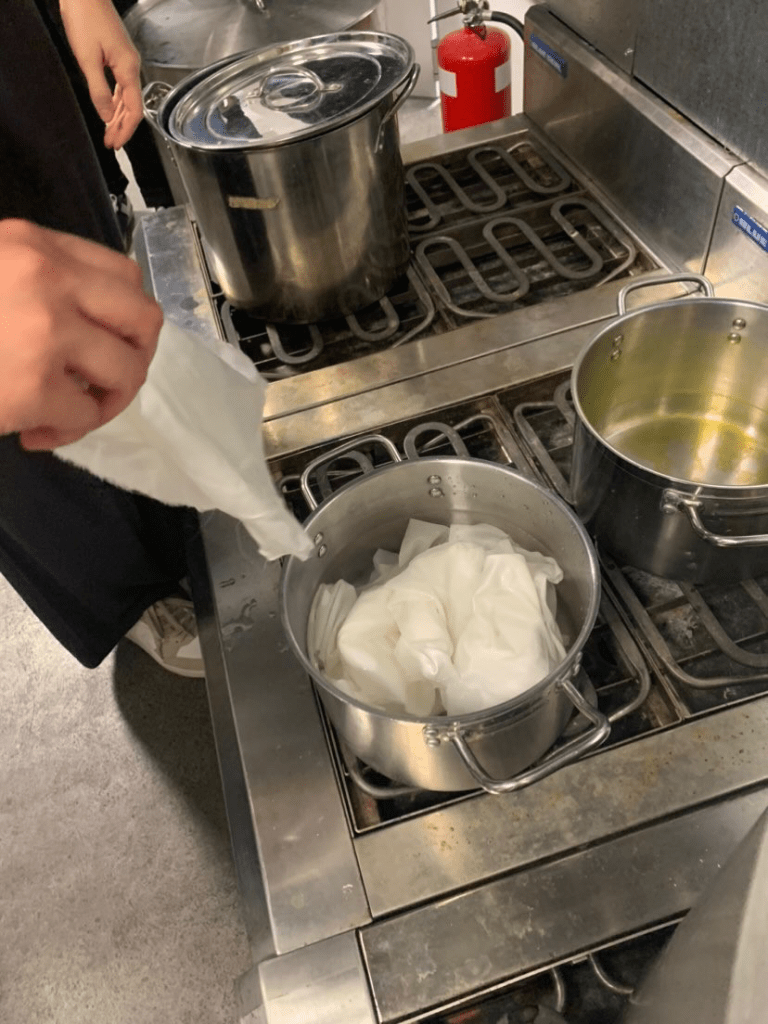
When weighing your dye material, in this case we weighed our onion skins, you should also weigh the fabric that you will be dying.
- The weight of the fabric will determine how much mordant we will require when scoring our fabric and will help us calculate the percentage of onion skins we have
- Total weight of our silk fabric was 87.5 grams
- The total weight of onion skins is roughly 98% to our total fabric weight
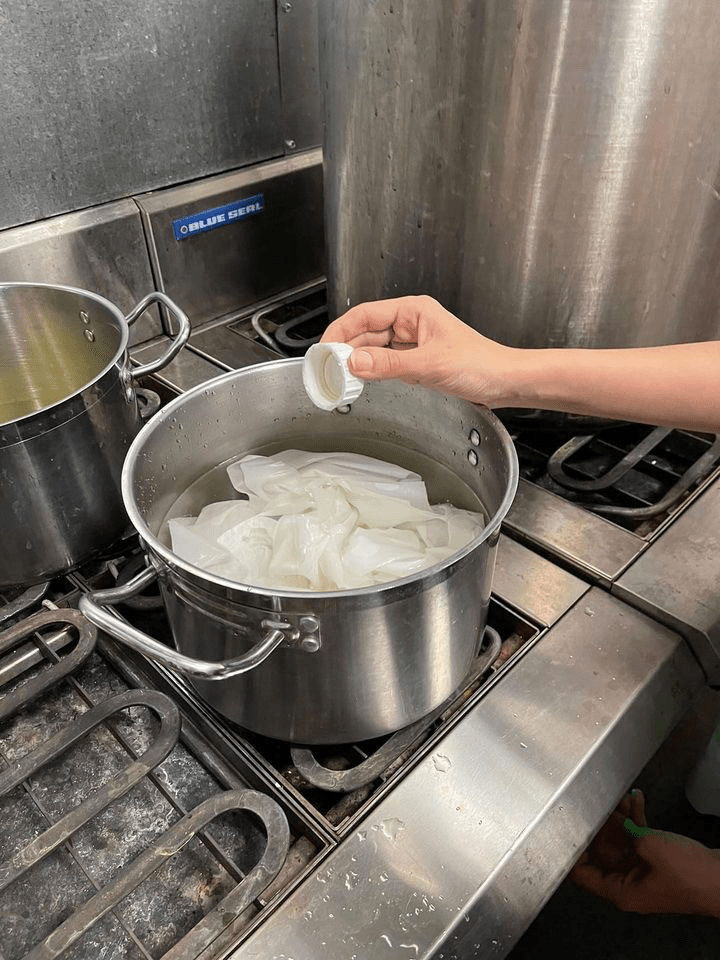
Scouring and mordanting our fabric.
- We first scoured the fabric by adding enough cold water into the pot to fully submerge our fabric. We then added some colourless detergent and brought the pot to a boil. Because our chosen fabric was silk, we only need to scour our fabric for 45 minutes however with cotton you would need to scour for about 2 hours. After 45 minutes, remove the fabric and thoroughly rinse in cold water.
- Before we start the mordanting process, be sure to thoroughly clean out the pot used for scouring the fabric.
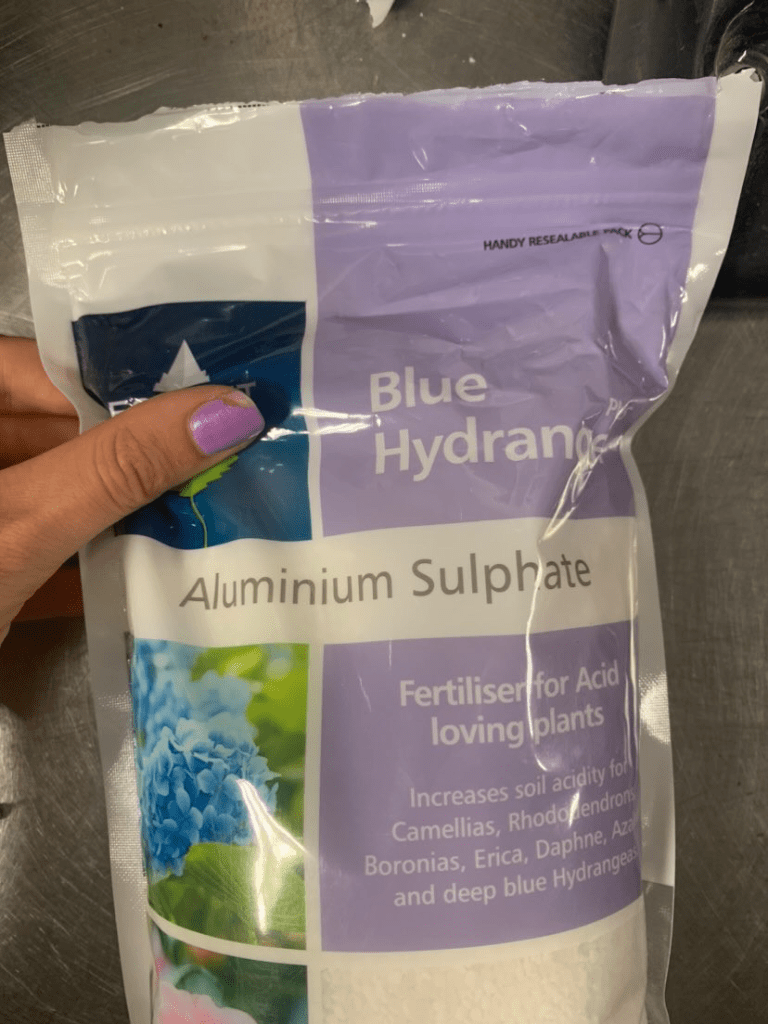
- For the mordant, we use 15% of the total fabric weight for the aluminium and 3% of cream of tartar. Add this to a pot of cold water with the fabric fully submerged.
- Mordant is important as this helps to fix the colour onto the fabric thus allowing the colour to stick.
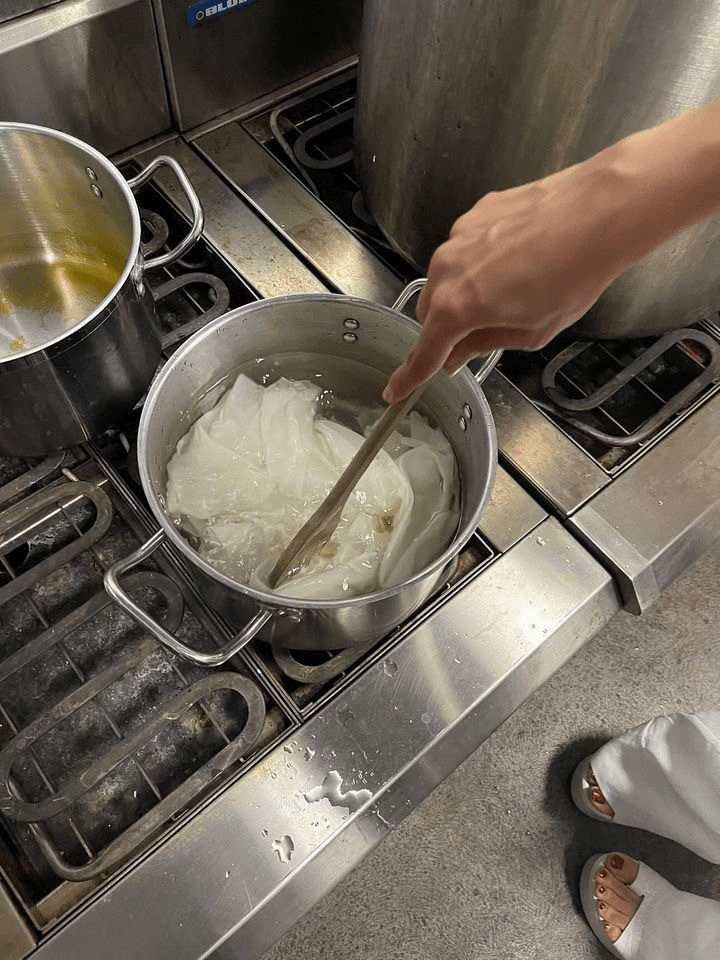
Once all the mordant has been added to the pot, bring to a boil and mixed continuously to ensure all pieces of fabric are evenly and well coated.
- This process will generally take about 2 hours however due to the size of our fabric samples and the type of fabric being silk, we only need to boil for 20 minutes.

Once the fabric has being boiling for 20 minutes, remove from the heat and rinse under cold water.
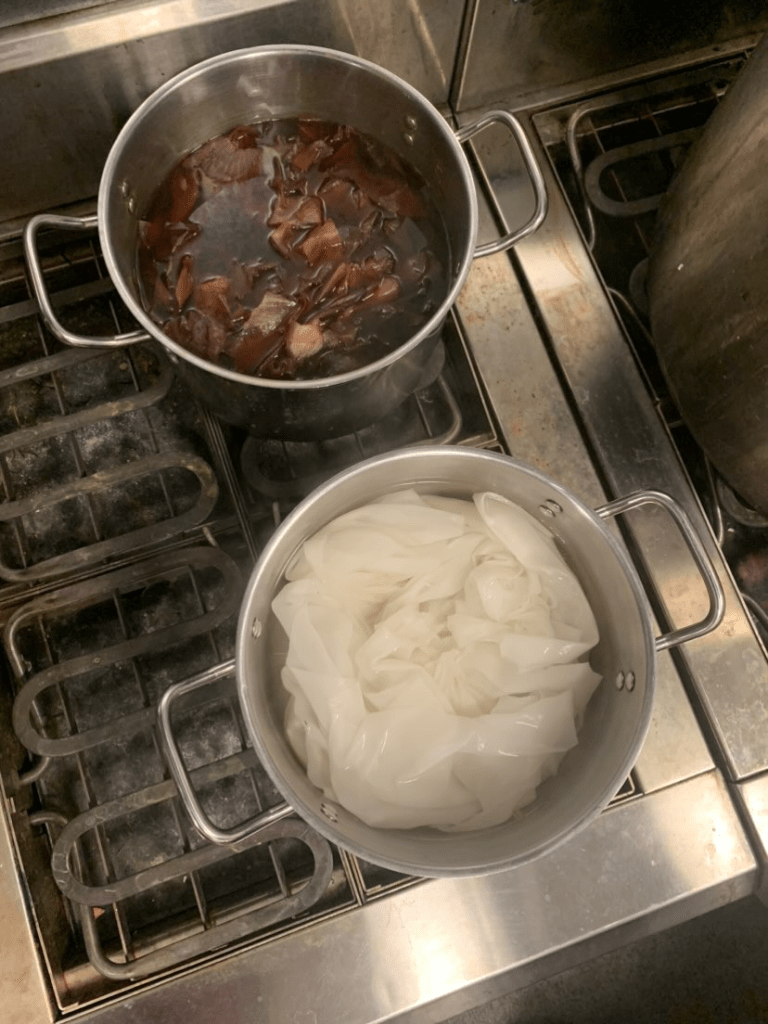
To allow for a richer colour, we decided to leave the onion skin in the pot overnight. Do note that this was after boiling for 2 hours.
As were leaving our onion skins to sit over night for richer extraction of colour, we fill the pot with clean cold water and left our scoured/mordant fabric submerged ready for dying the following day.
DAY 2
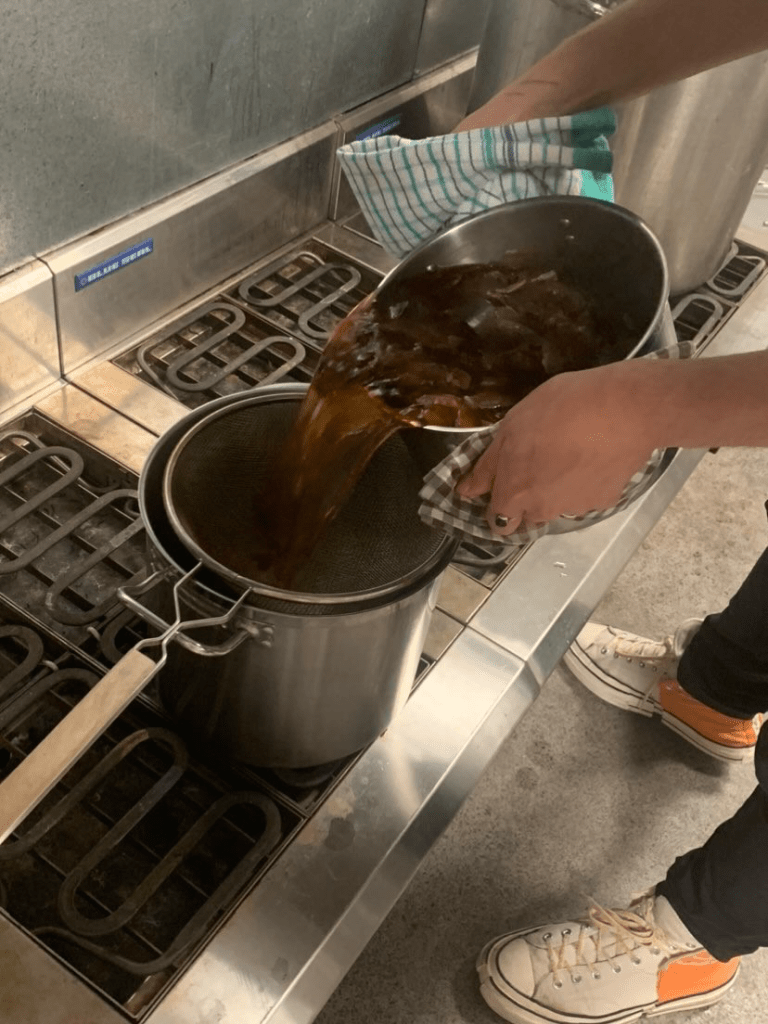
Extracting the dye.
- With the overnight pot, we removed the onion skin from the extracted dye and put this aside in a pot.
- Extra onion skins were brought in on day 2 so we decided to extract this and add it to our overnight pot. We followed the same process as documents under day 1 with the only difference being that we did not leave this overnight.
- Day 2 batch: brown onion skin 5 grams + red onion skins 12.5 grams = 17.5gram. Added to Day 1 batch totalled to 108 grams thus bringing the total percentage to the weight of our fabric was over 100%.
- Once we had boiled the day 2 batch of onion skins, we sifted the onions skins out and added this to the day 1 batch.
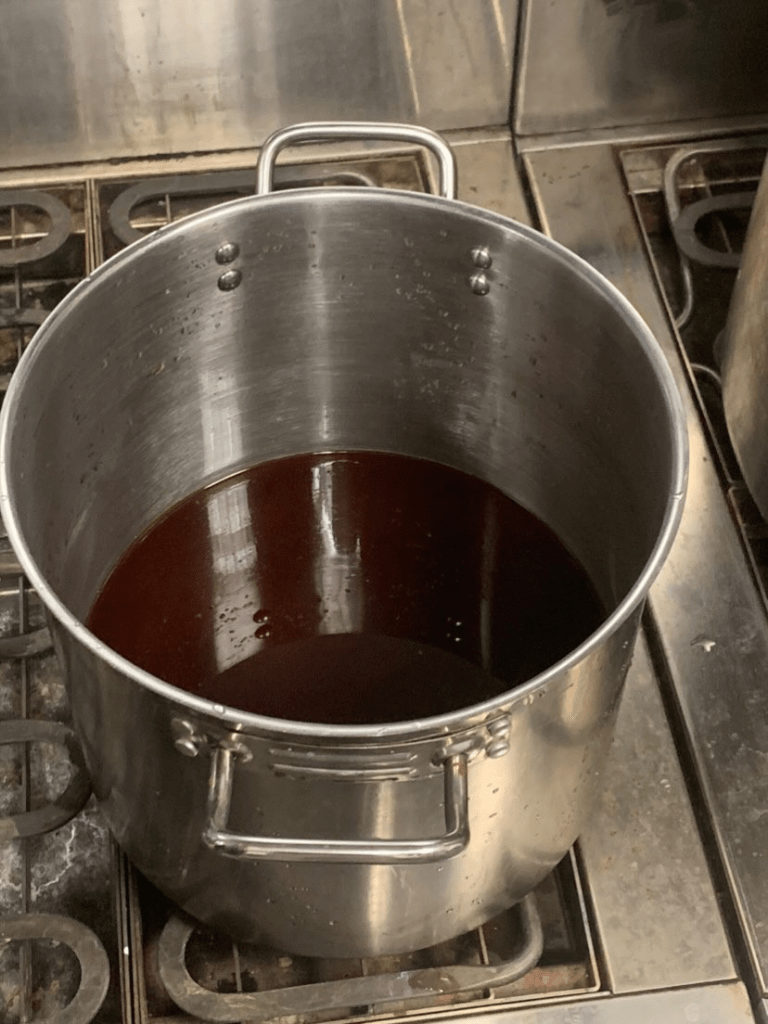
Once the day 1 and day 2 batch were combined, we brought the extracted dye to a boil.
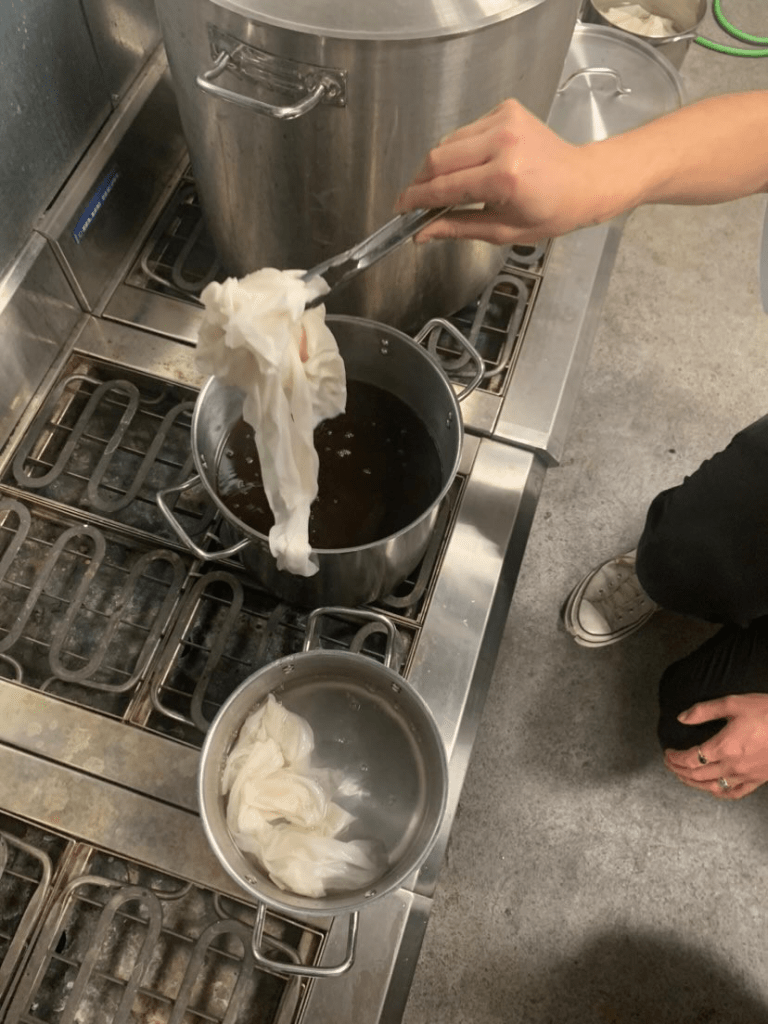
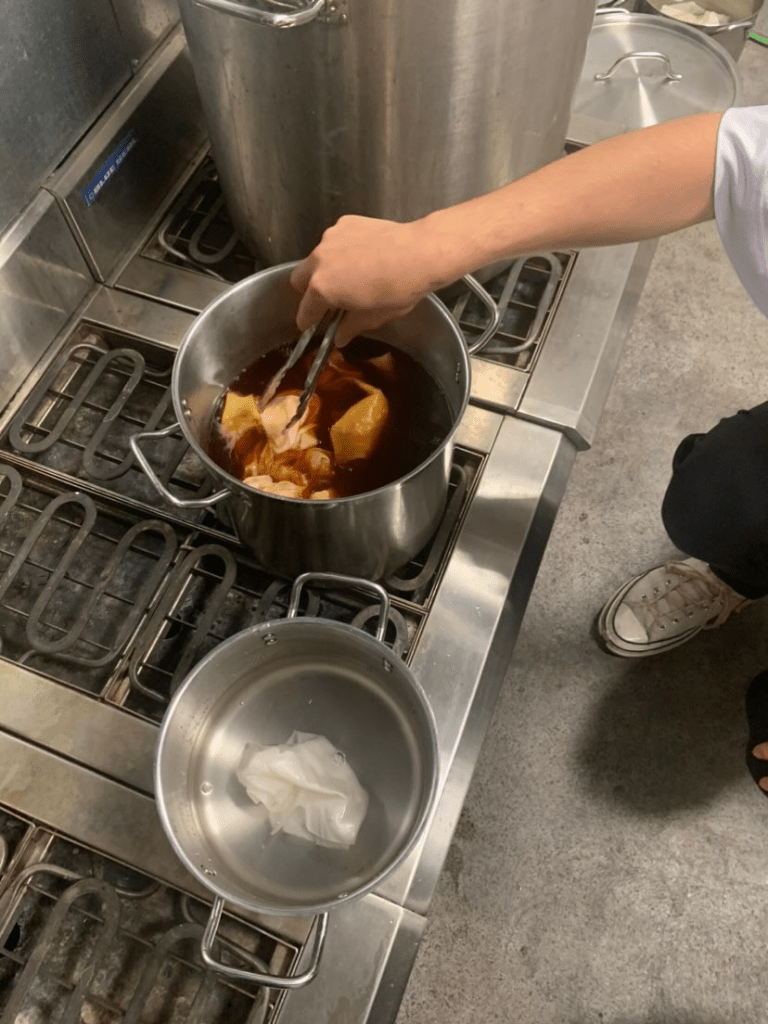
While the extracted dye was boiling, we added our scoured and mordanted fabric to the pot.
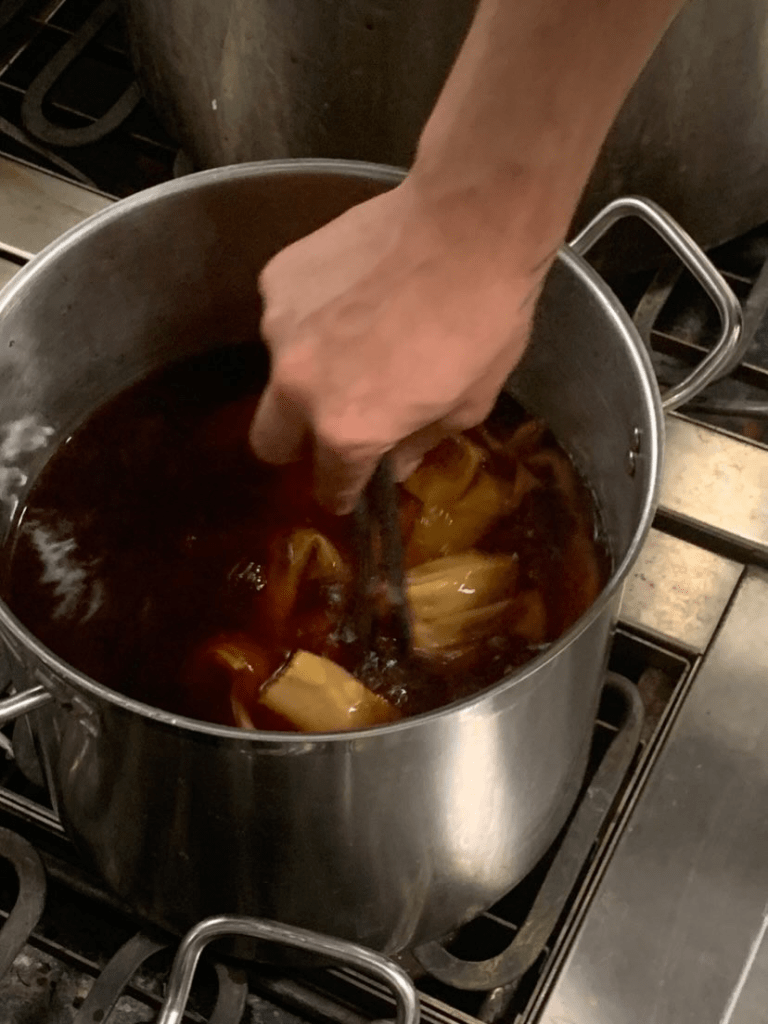
While the fabric is boiling in the extracted dye pot, occasionally mix to allow the colour to evenly coat each piece.
- We left the fabric to boil in the dye extraction for 1.5 hours.
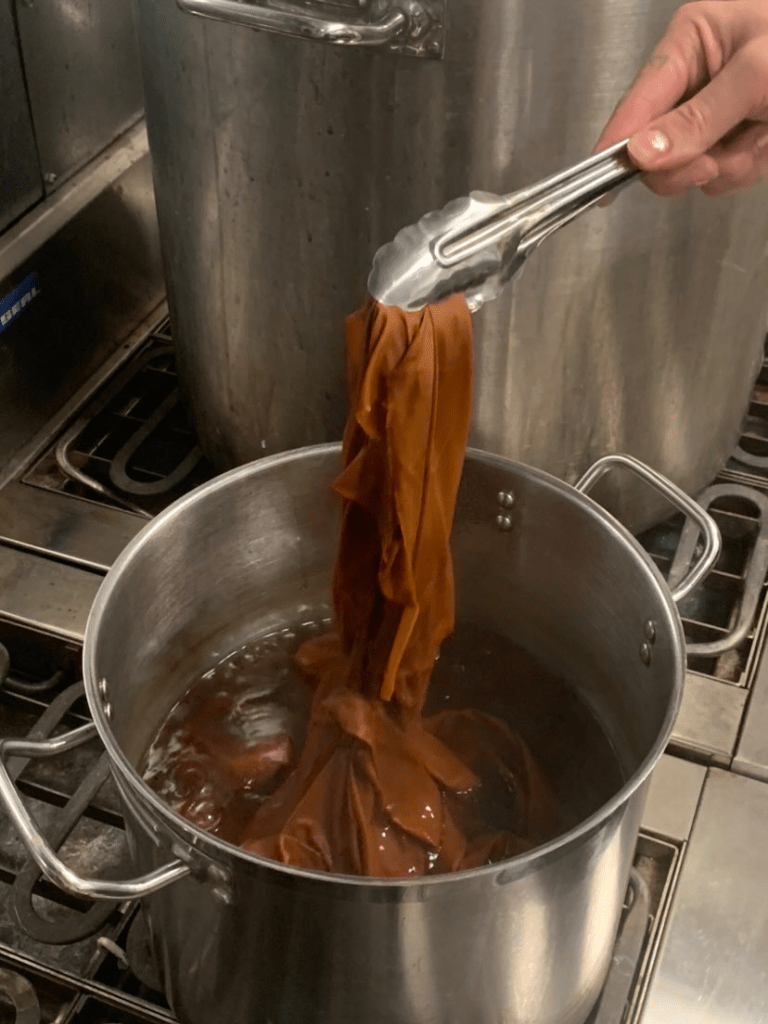
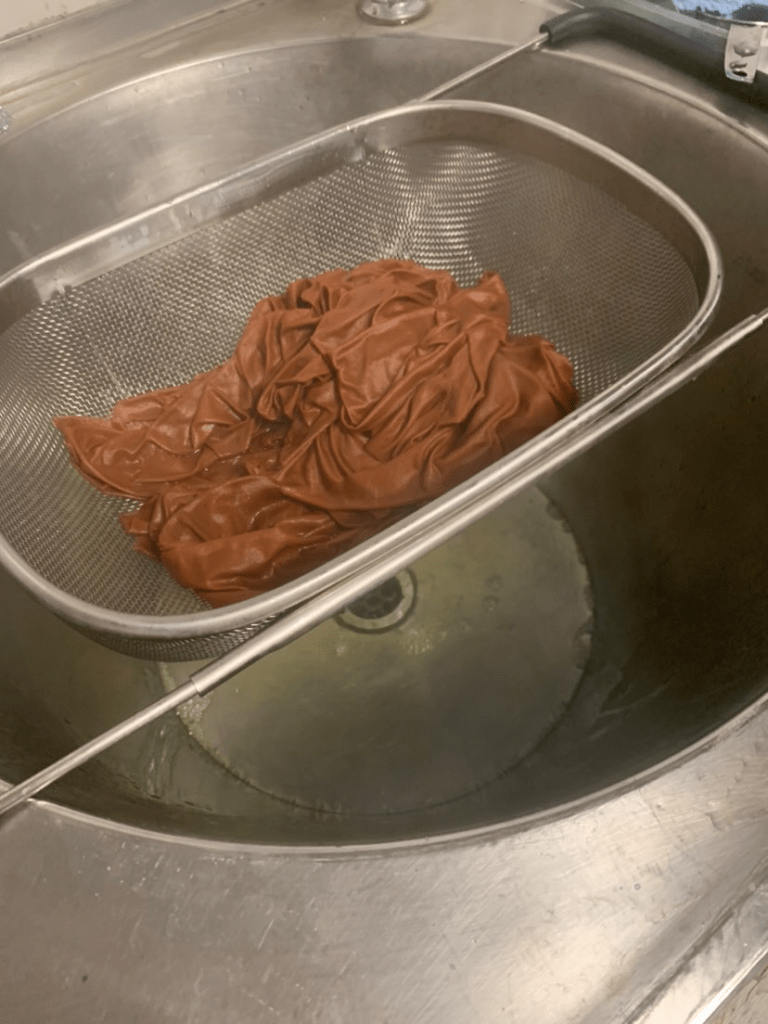
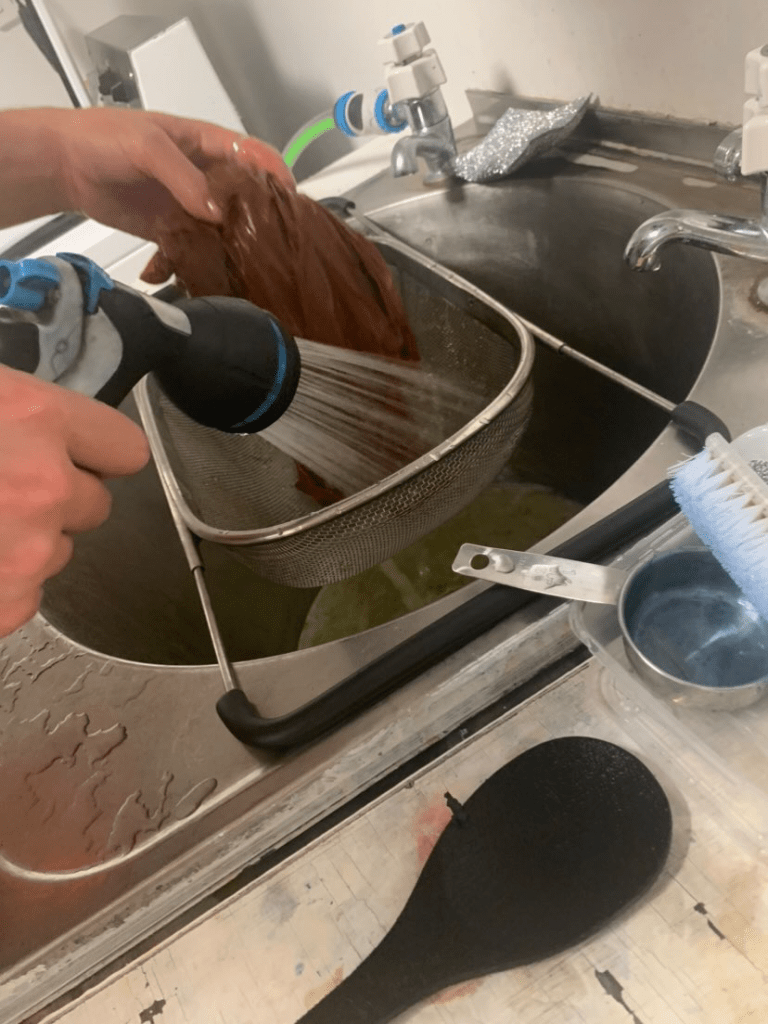
Once 1.5 hours has past, we removed the fabric from the dye and rinsed it thoroughly in cold water.
- No detergent is required when rinsing our the dyed fabric.
- Please note that you can keep the dye extraction for other dye experiments. You can add different types of modifiers to the dye like iron or baking soda to see if you can get different colours.
- After having had rinsed our dyed fabric, we left this to air dry overnight.
Bibliography:
Rasika, Karekar. Fashion ethics and Sustainability. LAP Lambert Academic Publishing, 2014.
 Seini's Blog for Earth-Centred Design and Cultural Sustainability