The True Cost
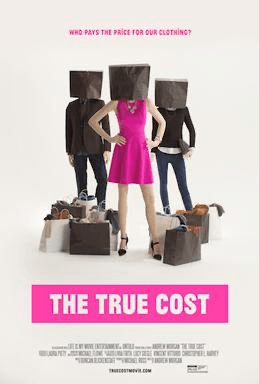
‘The True Cost’ documentary exposed the ugly side of the fashion industry. Fast fashion emerged in the 1990’s and for the past 20 years it continued to evolve and fester into this uncontrollable force of overconsumption, pollution and exploitation. We are offered an insight to how the fashion industries production system exploits workers in third world countries, how it contributes to the pressures to produce high volumes of clothings has influenced this move away from natural farming and this disconnection to human life and Mother Nature. After watching this documentary, I was forced to re-evaluate my purpose as a designer. I was pushed to look deeper into what impact I wanted to make in fashion and how I am going to do this.
https://en.wikipedia.org/wiki/The_True_Cost
What is fast fashion? Over the past 20 years this idea of ‘throw away fashion’ has emerged and has influenced the ways in which we consume clothing today. With the emergence of ‘fast fashion’ or ‘throw away fashion’ this has swayed major retail brands like Zara, Shein, and H&M to seek low cost options for manufacturing, created a push for quick turnaround timeframes along with high volumes of production. The result of this has lead to the growth in consumption, a fall in the quality of clothing, the exploitation of factory workers, a massive increase in profits, increased pollution and an overall disconnect to the enviroment.
A strong theme that I picked up when watching this documentary was that of profit and consumption. Overconsumption being the driving force behind the current methods of production within the fashion industry. In the documentary we saw farmers of cotton moved towards the use of pesticides and genetic modification to meet the demands of the fashion industry. With the shift in farming methods we see how this has not only impacted the quality of soil and the natural composition of plants but also see the negative ramifications on farmers health. Larhea Pepper, a cotton farmer, talks of how her grandfather who was a German farmer had settled in the US in the 1920’s. She explained that her grandfather believed in respect for the land and had taught her that we are stewards of the land. 80% of cotton farming is now GMO genetically modified. Larhea describes how these genetically modified plains are roundup ready meaning “instead of farmers spot spraying weeds occasionally in their fields or labourers to walk and eliminate the weeds, now they’re spraying whole fields.” Cotton produces fibres that are responsible for most clothing in the world and as our appetite for fashion continues to grow the cotton plant is being re-engineered to meet the demands of the industry. John Hilary, the executor director of War on Want, states that the industrialisation of agricultural or the intensification of agriculture has forced this move away of old forms of farming which were very much in tune with nature.
We see that the incentive of profits has lead to the exploitation of factory workers in developed countries. By globalising production companies are able to outsource the making of products to low-cost economies. Those at the top of the value chain get to choose where products are being made and if factories say that they cannot make a product at a low cost companies can easily switch manufacturers. The trickle down effect of this is that in order to keep the business of these fashion corporations, factories keep productions costs down by paying low wages and forcing their workers to work longs hours in poor work conditions. Arie Jebtik, a garment factory owner based in Bangladesh, talks about how the pressures from fashion giants means that he has to transfer these pressure onto his workers in order to meet his clients demands/needs. Shima Akhter, a garment worker and president of her union, shares her story as a worker in these garment factories. Female workers who make up about 85% of the industry are paid among the lowest with an average wage of less than $3.00 per day. She talk of how she is paid about $10.00 per month and of how the factory is poorly ventilated with chemicals permeating throughout. She also explained how they formed a union and when trying to address some of the poor conditions with their mangers, the group was attacked and beaten. Here we see how profits are placed above basic human rights of workers who are mothers, sisters, daughters.
The reduction in the pricing of clothing has fostered this culture of throw away fashion. Throw away fashion then feeds into our hunger to consume more and more. With this, profits continue grow and economy keeps turning out these unsustainable demands for ongoing growth.
Below are 3 talanoa questions that I have used to demonstrate my understanding behind the documentary in the context of this course.
Where are we?
The fashion industry in currently in a place where consumers are well aware of the horrifying truths of behind fast fashion and in response to that, companies have resorted to ‘greenwashing’. These large corporations have convinced consumers that they have changed their ways and are now environmentally conscious and are advocates of the workers who are exploited in the factories that they fund to make their clothes.
We can see a shift of responsibility onto the consumer to force the changes required in the fashion industry to protect the environment and to stop the exploitation of human labour. There is most definitely an increase interest in sustainability however the action required in order to make real change has been glossed over completely.
If there was real change, why is it that in today’s world fashion houses like Zara, H&M, Shein etc continue to flourish and grow?
Where do we want to go?
We want to be in a place where fast fashion is not the first option, is not felt to be the only option and is not able to flourish the way it continues to. We want to be in a place where the fashion industry is not a huge contributor to the pollution of the environment and where multimillion dollar companies are not able to exploit human labour while evading responsibility.
How do we get there?
By putting pressure on the system that allows these injustices to occur. Yes, we as consumers have control however it is not fair to put the responsibility solely on the consumer.
We need to continue to push for the implementation of policies that prevent companies from continuing this cycle of pollution and exploitation. We need to disrupt and dismantle the ecosystem in which fast fashion exists.
We all need to work towards living and thinking about sustainability rather than overconsumption. The ways in which we can achieve sustainability seem daunting and impossible but it necessary that we start now. After watching the documentary, it appears that the way towards a more eco friendly and sustainable future are through policy changes and lifestyle changes which can only be possible with the us as people changing our priorities to focus on the betterment of everyone rather than our own comfort.
Bibliography:
Vertica Bhardwaj & Ann Fairhurst (2010) Fast fashion: response to changes in the fashion industry, The International Review of Retail, Distribution and Consumer Research, 20:1, 165-173, DOI: 10.1080/09593960903498300
 Seini's Blog for Earth-Centred Design and Cultural Sustainability