Auckland Museum
Curator comments:
- The exhibition is different with the intention of being multi disciplinary.
- The set up of the exhibition is not meant to be chronological, not linear in the way it has been arranged – rather it is grammatically grouped.
- Manawhenua – ngatipaua, Tainui and Ngatiroukawa, the 3 iwis connected to area where museum situated. The 3 bird sculptures are a representation of these 3 tribes, all of whom have had some involvement in the making of the exhibition.
Below are raw notes taken during the tour
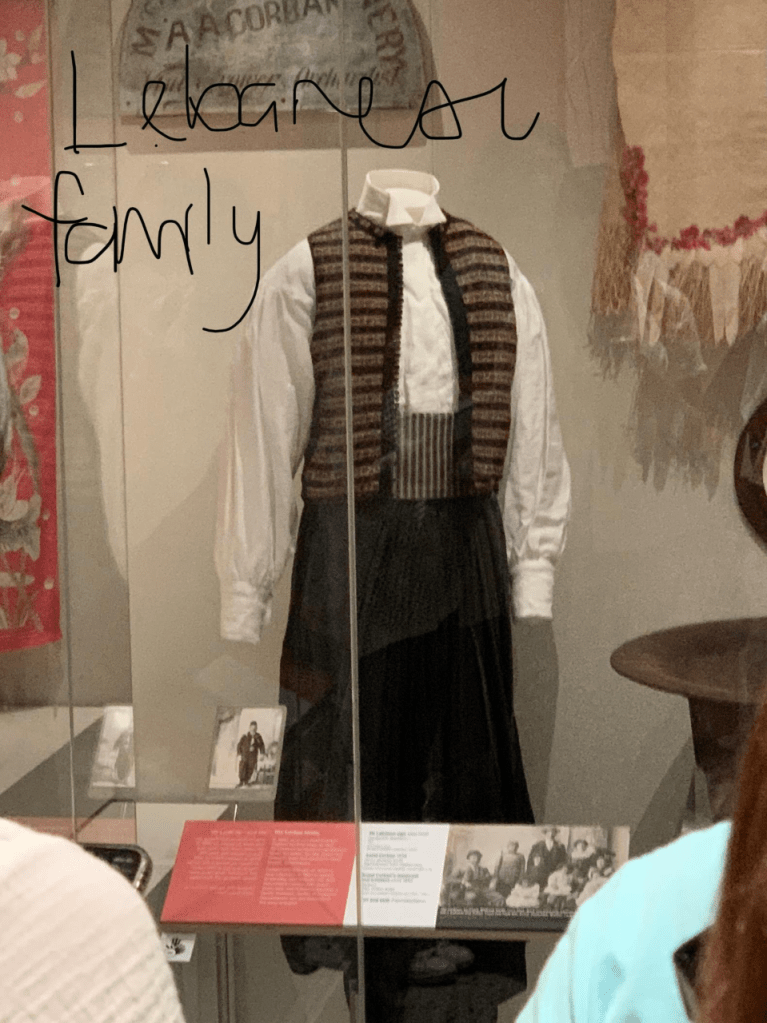
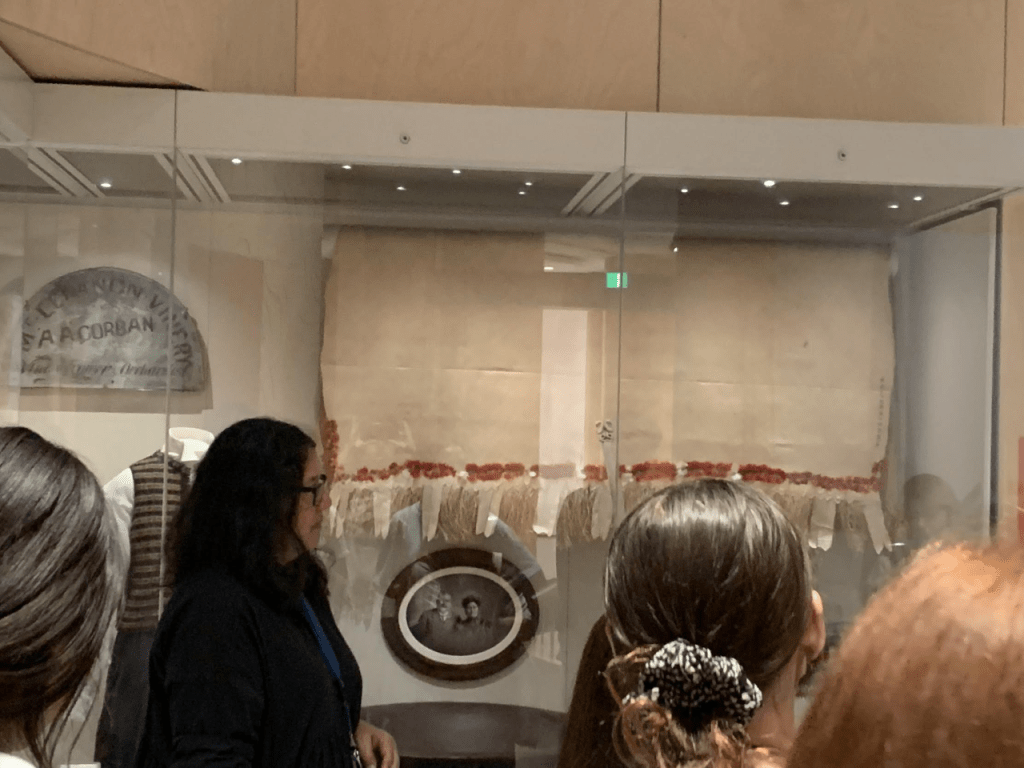
- Corbin family from Lebanon – garments are tradition Lebanese costume from
- The mat was gifted to the family by Queen Salote
- People who have migrated to NZ for a better life also bought their cultural practices which further enriched NZ history around textiles
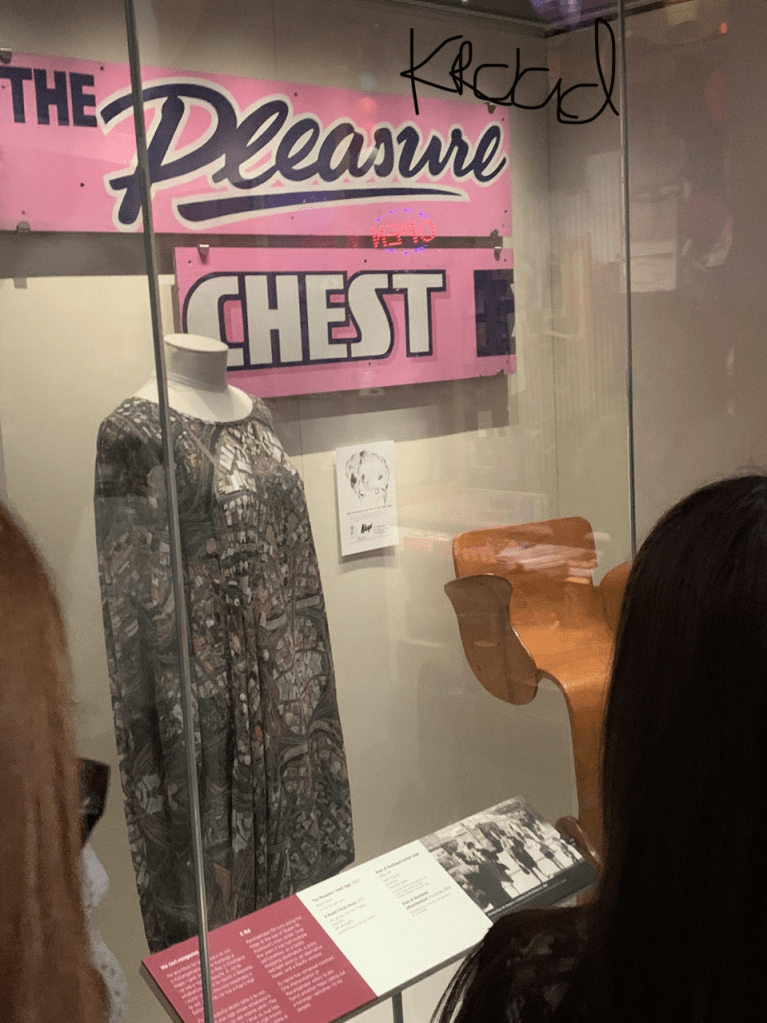
- E-pop based on K-road
- Story of gentrification starting with K-road initially being a place for minorities but is now upcoming with the change in demographic
- Was referred to working persons Queen Street and used to be known as Coconut Grove as it used to house clothing stores, food stores etc aimed at Islanders
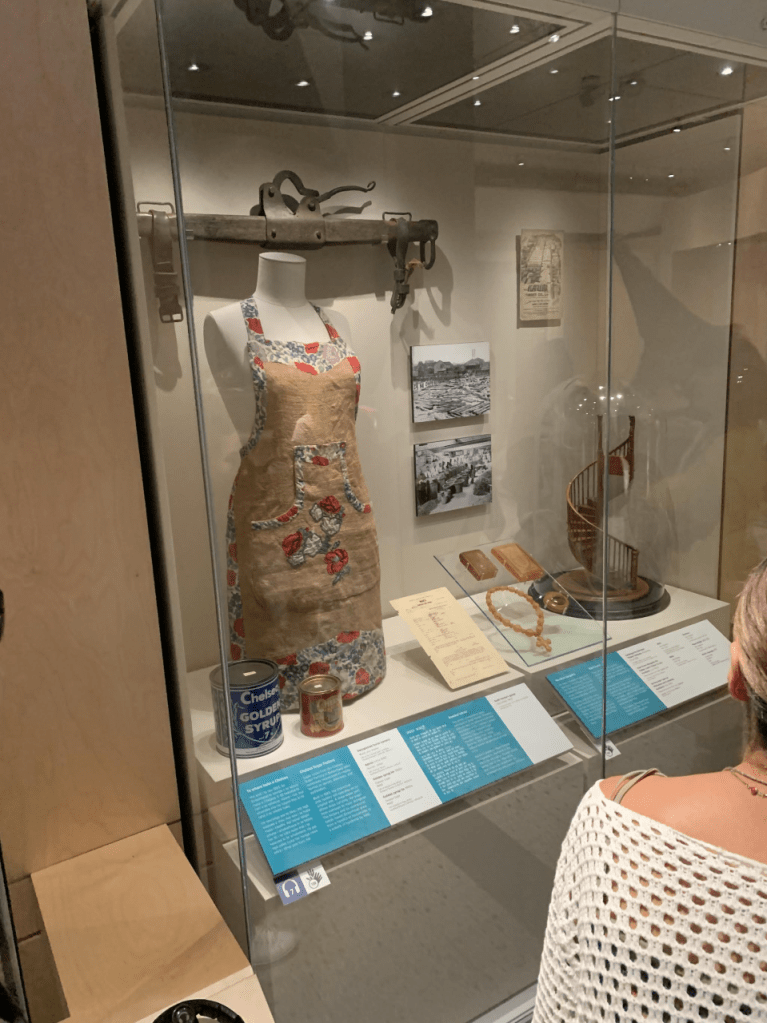
- apron made out of sugar bags
- History of NZ and the water ways being a source of income that helped our economy
- Everyone used the Chelsea sugar packs to make clothing, door mats etc
- Sugar was a source of class indicator because it was considered a luxury item in early times
- Germatia who were India’s bought to Fiji to grow the sugar – at the time slavery was outlawed and so NZ found a way to exploit people without breaking the law
- Indian people were bought to Fiji under false pretences
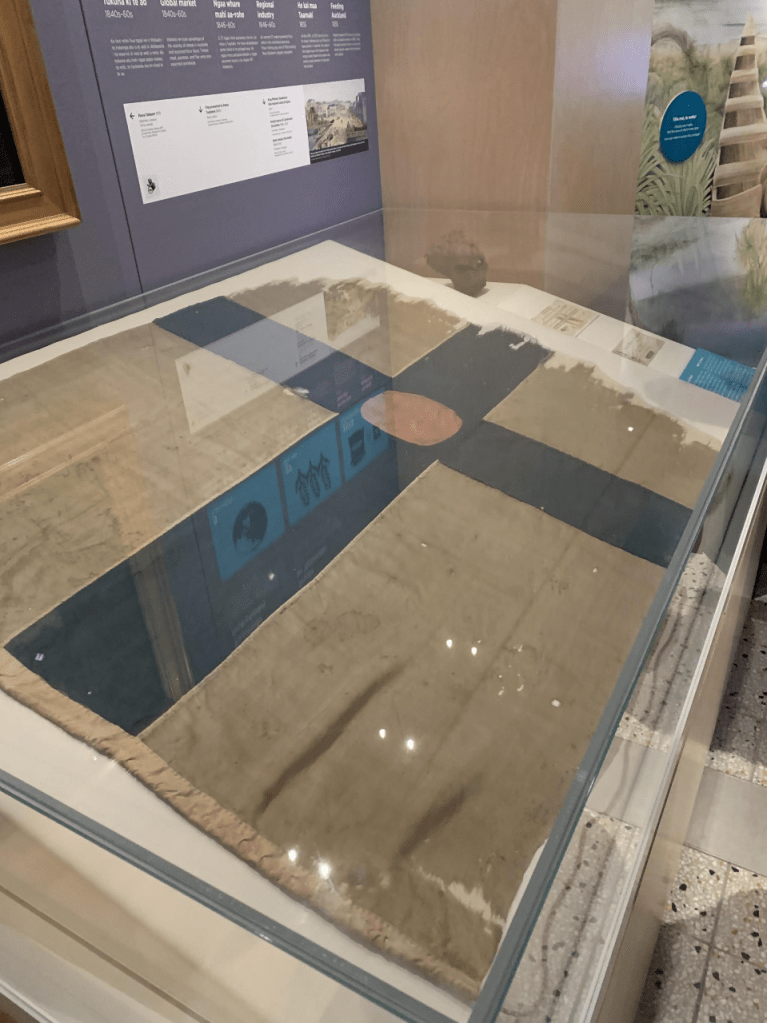
- textile conservation
- Flag no effort to patch up the holes etc to show the aging of the textile
- Can see the fine meet used to make the flag
- Tiki tiki tangata
- The bringing to peoples together
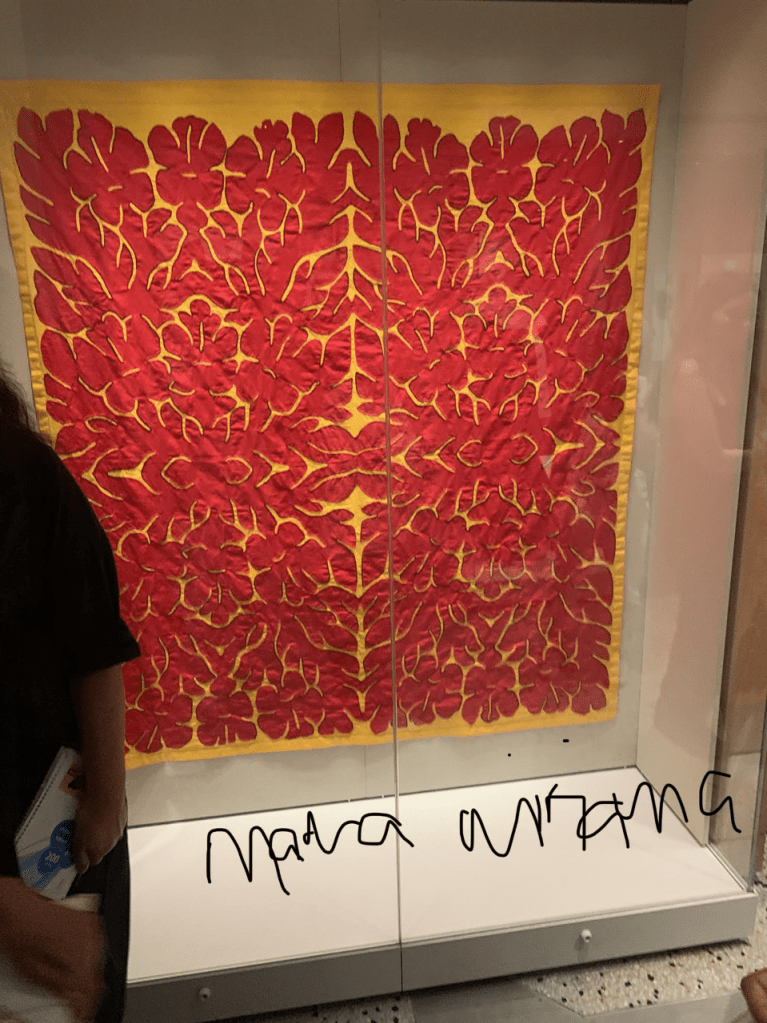
- Rarotonga blanket – pacific art centre from Henderson
- Mama Miriama commissioned to make blanket – stitched by hand
- Tauonga – meaning master of superior maker of…
- The blanket is recalling the red hibiscus that surrounded her during her childhood

- Black poi- Māori
- Not very common to have black poi as generally while
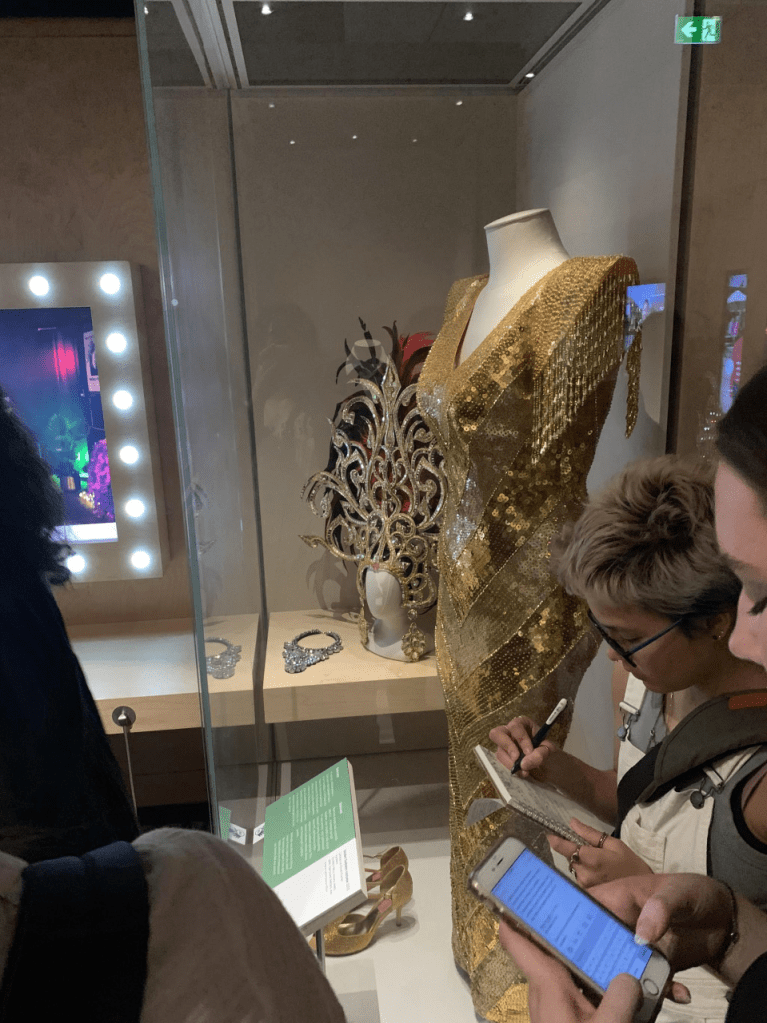
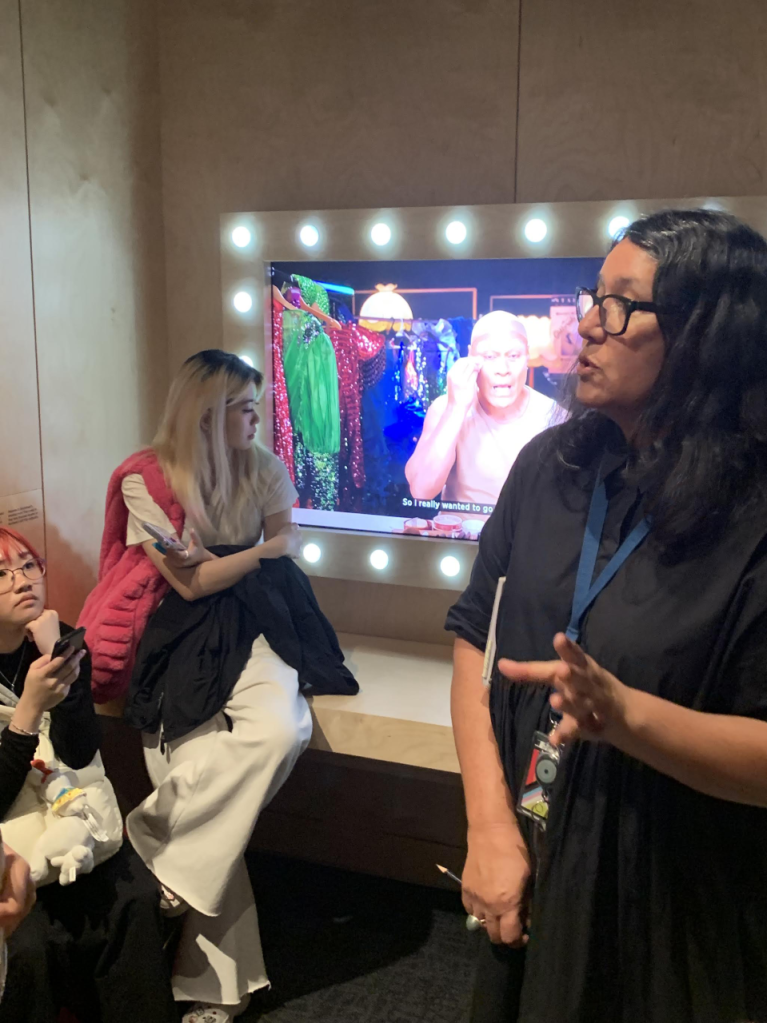
- Gold dress with mirrored head piece
- To address gaps in the collection – because certain lives are more often considered more important than others and through that, the representation of certain lives are completely ignored
- One being that of the queer group
- Staircase was a club that historically held a space for drag people
- Biography style exhibition to make one feel as though they are sitting with them and talking to one another
- Want to encourage empathy and by displaying the dress to closely, leads you to see yourself in the dress etc
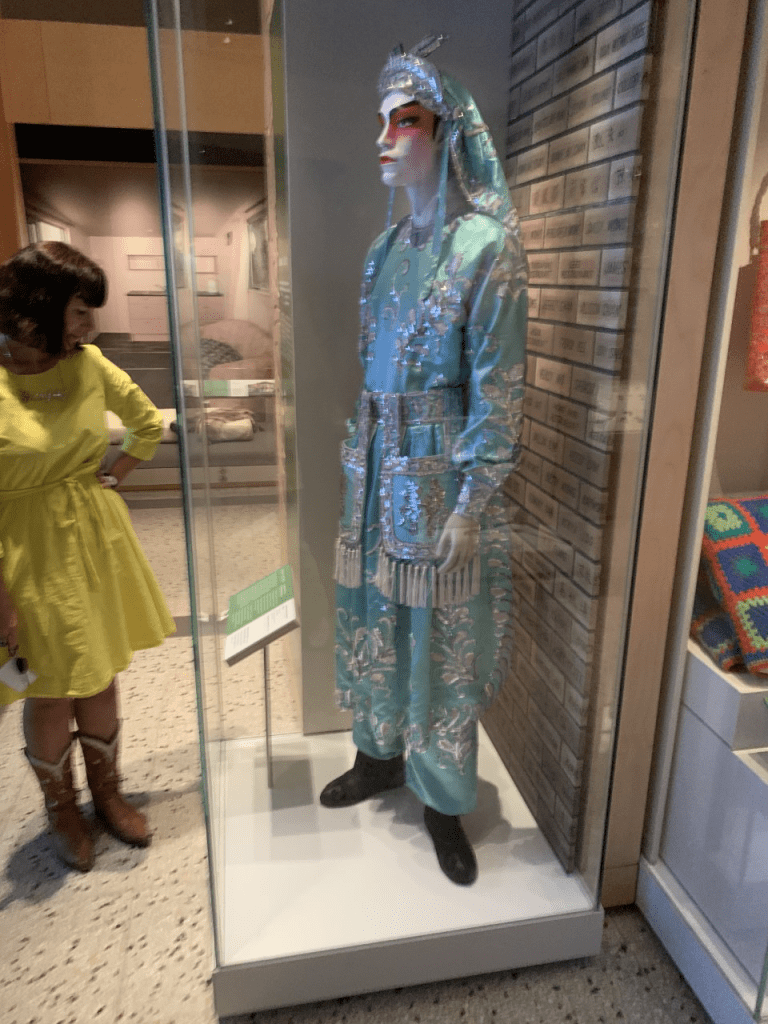
- Light turquoise co-ord with silver sequent
- Loaned Auckland Chinese community Centre from 1960’s
- Important to have the makeup as it is very much part of the costume
- Limitations as only one mannequin maker therefore features are quite European and not reflective of the Chinese face
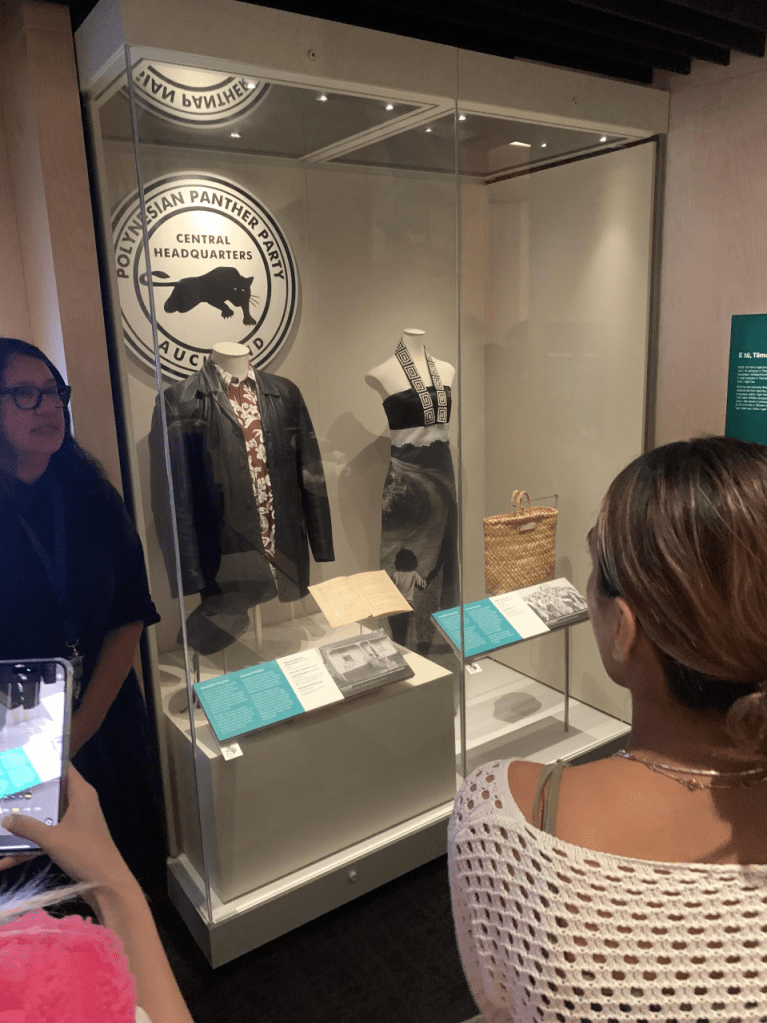
- Black Panther
- Komaranga – aim as a activation space to encourage thought, the challenge the status quo
- This is the black panther jacket
- Acquisition money was used by black panther for a scholar for student studying activists movements in Aotearoa
- Differentiation from black panther was the aloha shirt that would generally be worn underneath
- Dress was made by Ana where it depicts the protest of Maori confiscated land
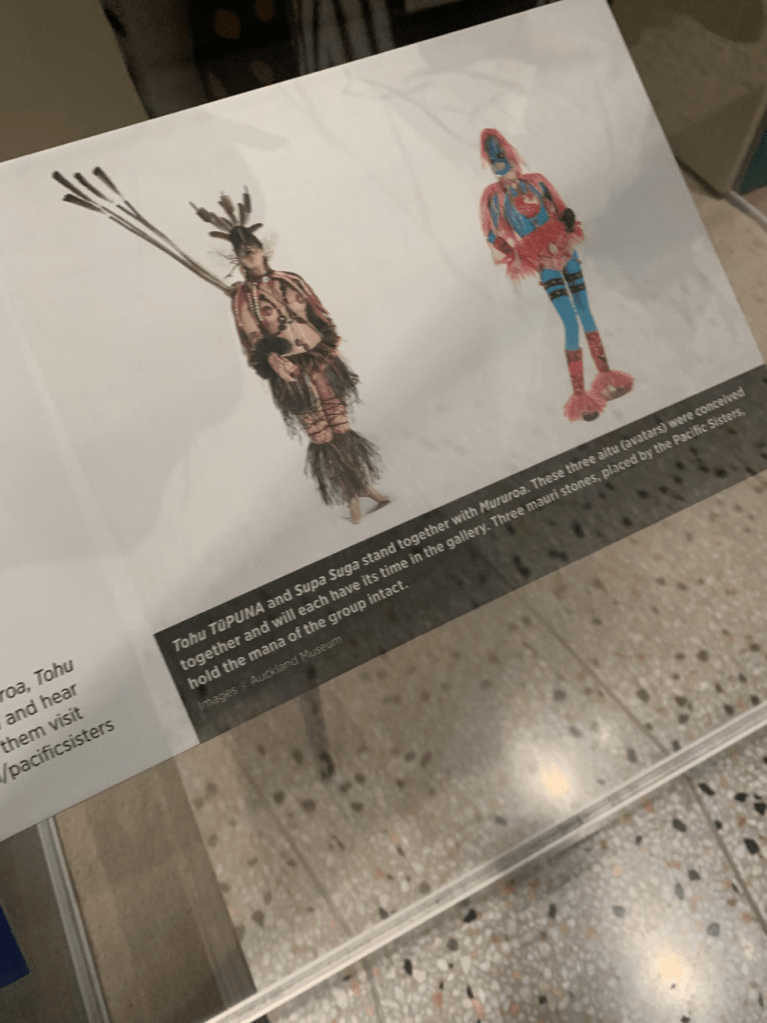
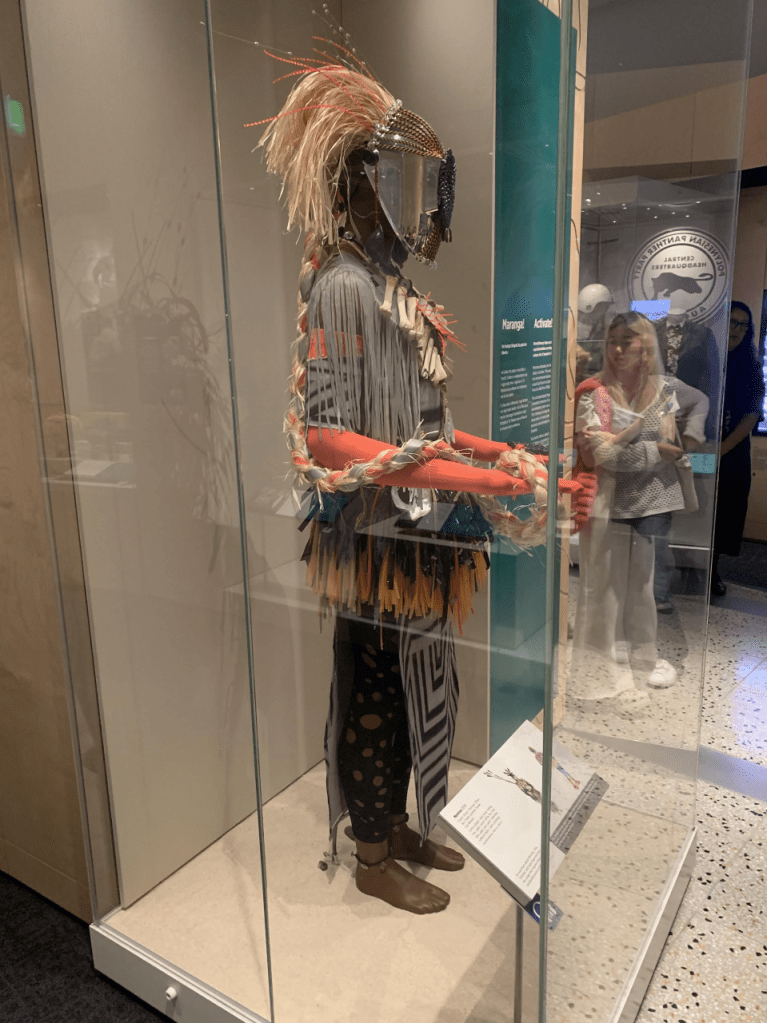
- Pacific sisters dressing
- 1 of 3 garments
- Each set of clothing based on moruroa
- Welder wasp forms the headpiece l, has contemporary style titi (meaning skirt), video tape film is the skirt..
- Aitu (god like figures) – the other 2 with the idea that they are protecting rather than protesting
- Stone is the right hand – artist bought back from Rarotonga which is representative of partner who passed away
- Sand below – different textured ideas
- This is representing the story of impact on islands that were used in military testing
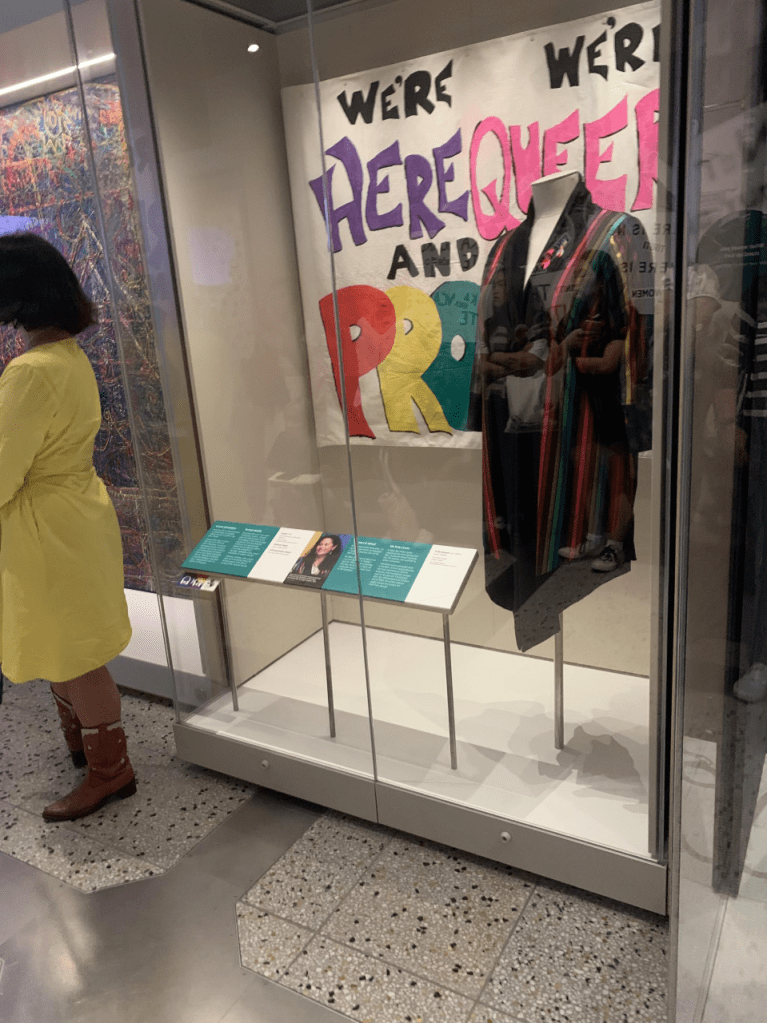
- Queer activism
- Louisa Ward, dress worn when equal rights in marriage allowing gay marriage
- Importance of symbolism with the rainbow to evoke the importance of the moment for queer community
- Emily who painted banner is know for evoking change and draws from different art sources and participates in different areas of activism – painted on Tapa
- Connection of Maori with Tapa/bark cloth however more known practice within the Pacifica islands
- Key point to see explore fashion as an act of activation
- Fashion can be radical in the ways we explore textiles, symbolism to hold stories of experience and memories
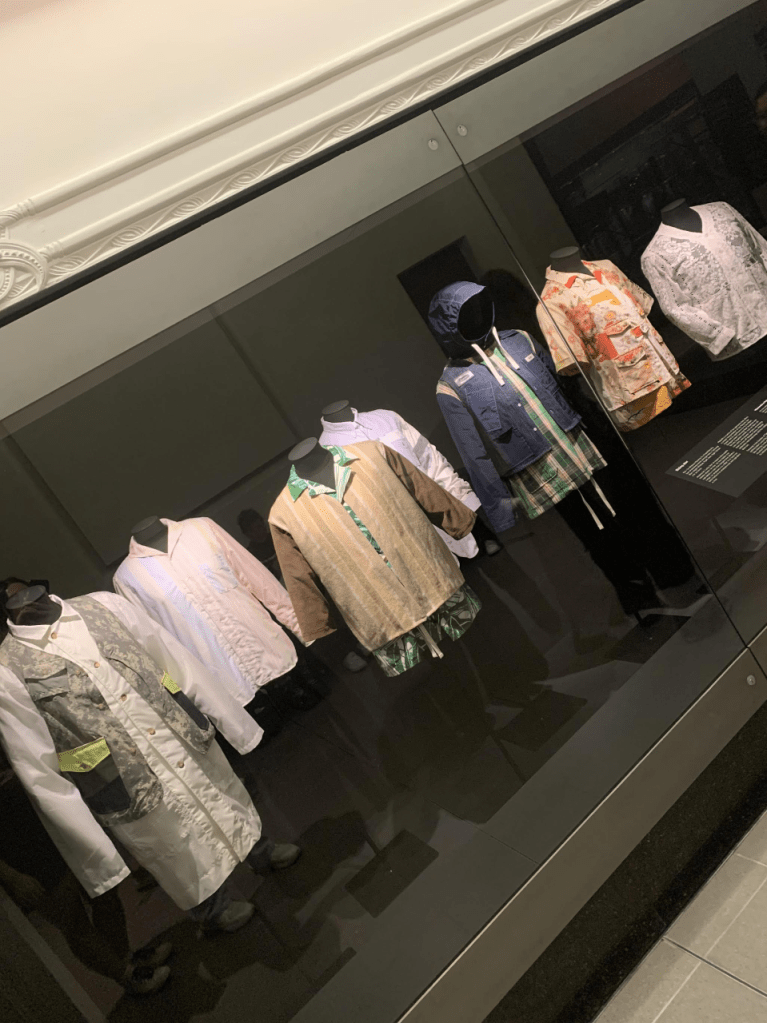
- acquisition Tuhiramgi Blair who went through AUT
- Collection of 10 shirts, this includes with mannequins wearing double layers too
- Items made by shower curtains, old tents, blankets etc
- Biographic as it has photos on the shorts etc
- Based on decolonisation as each shirt represents different forms activism etc
- Biography serves purpose to drive away from this very colonised gaze where one would explain at assumed facts which takes the story, life, emotional essence
- In some context, this would be considered low art – wanting to disrupt this idea by taking these categories out of the equation because high art does tend to be geared towards art made by a certain group of people
Discussion with curator, Giles and Harita
- Colonial infrastructure so needing to speak to this and one of the ways one can do this is by disrupting the standard use of items, disrupted conversation around it etc
- Looking to intersect ideas by exploring the many different ways one can find meaning and what it does
- Body adornment, how do they function, how do they function when worn in a certain space
- Activation point can be a person as once you see something, you decide how you understand it and how it impacts you
What I learnt from the exhibition?
The exhibition showed me that fashion has been used as a form of political and cultural activism throughout time. Minority groups have used fashion as a way to archive their cultural histories, resist colonialism and has used this as a way to disrupt the status quo. The works in this exhibition beautifully represents all minority groups, including those who are generally excluded from the conversation i.e. queer people.
 Seini's Blog for Earth-Centred Design and Cultural Sustainability